

Pascopyrum smithii (Western Wheatgrass)
| Also known as: | Smith's Wheatgrass |
|---|---|
| Genus: | Pascopyrum |
| Family: | Poaceae (Grass) |
| Life cycle: | perennial |
| Origin: | native |
| Habitat: | sun; dry to moist sandy or rocky soil; prairies, along railroads, riverbanks, rock outcrops, dunes |
| Fruiting season: | July - September |
| Plant height: | 1 to 3 feet |
| Wetland Indicator Status: | GP: FACU MW: FACU NCNE: FACU |
| MN county distribution (click map to enlarge): | 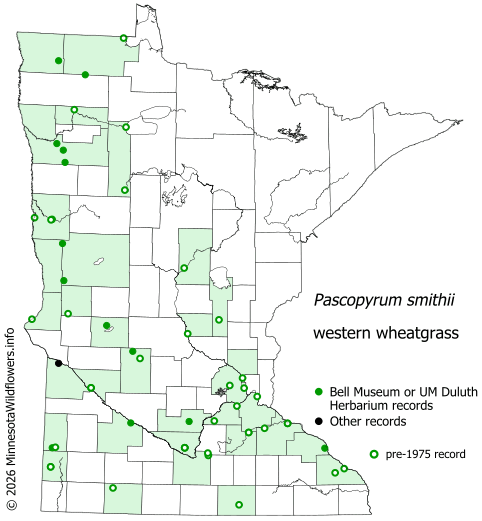 |
| National distribution (click map to enlarge): |  |
Pick an image for a larger view. See the glossary for icon descriptions.
Detailed Information
Flower: 
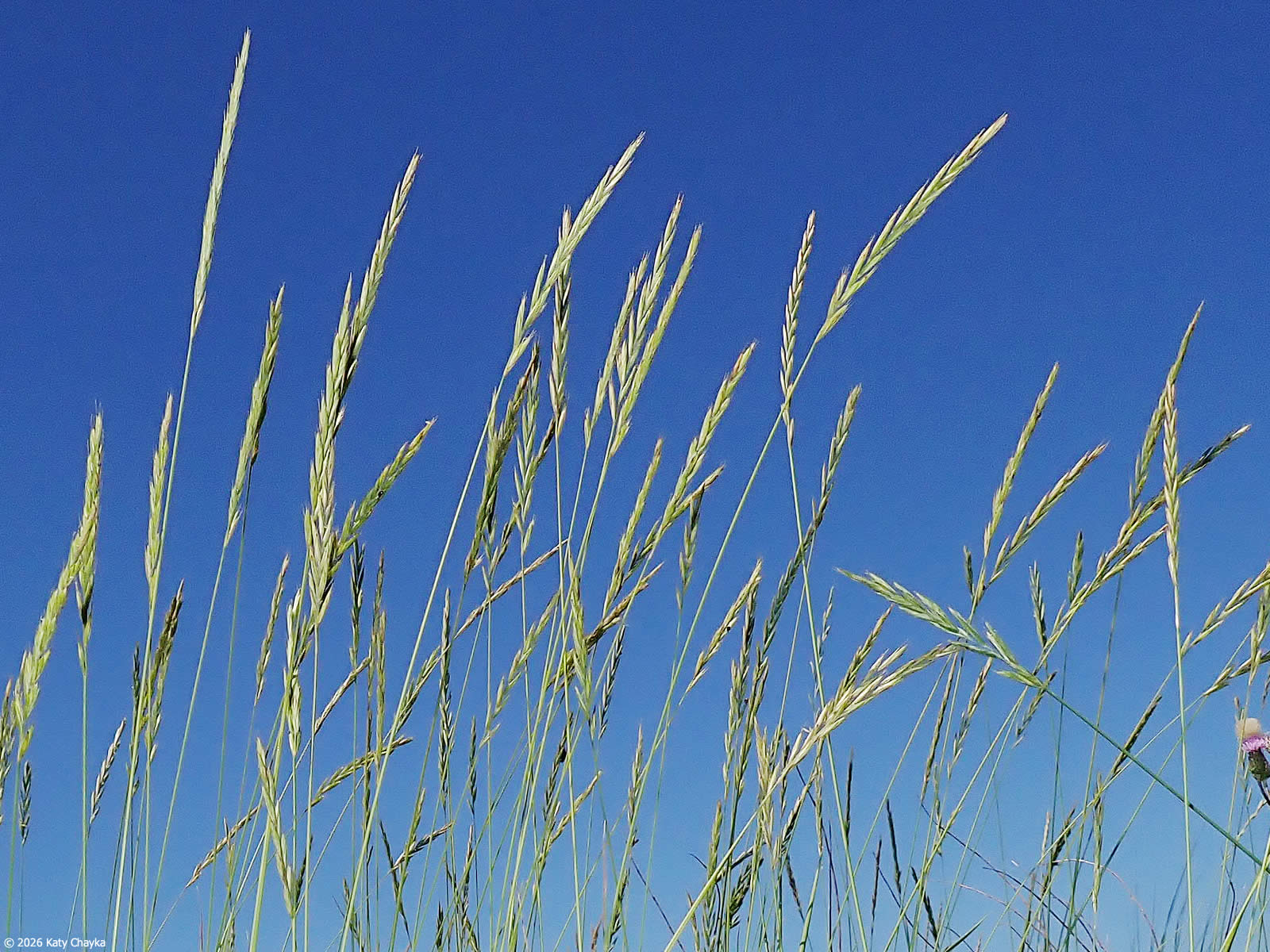 A single erect spike 2 to 6½ inches (5 to 17 cm) long at the tip of the stem, usually with a single spikelet (flower cluster) at each node, rarely 2, the spikelets appressed to ascending. Spikelets are flattened, the flat side pressed against the stem, and arranged alternately on opposite sides of the stem, 12 to 26 mm (to ~1 inch) long (excluding any awns) and have 2 to 12 florets, commonly 6 to 8; the uppermost floret may be sterile.
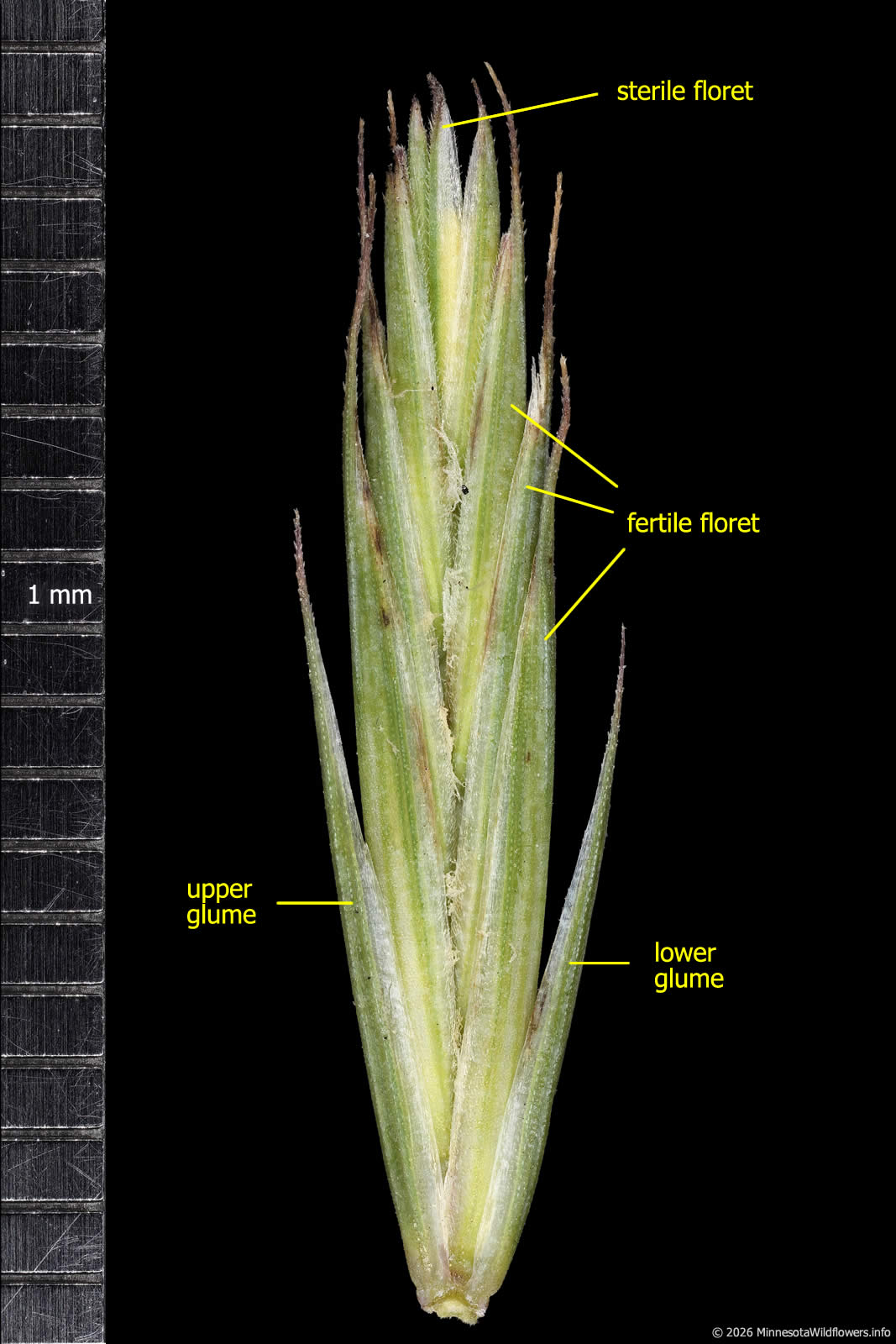 At the base of a spikelet is a pair of bracts (glumes), both shorter than the spikelet, hairless, lance-shaped, pointed at the tip, with or without a straight awn to 5 mm long, the lower glume 7 to 12 mm (to ~½ inch) long and 3 to 7-veined, the upper glume to 15 mm long, 5 to 7-veined. Florets are surrounded by a pair of bracts (lemma and palea), the lemma usually hairless, sometimes short-hairy especially near the base, 5 to 7-veined, 6 to 14 mm long, pointed at the tip, with or without a straight awn up to 5 mm long, the palea about as long as the lemma, 2-veined, rough along the veins.
Leaves and stems:
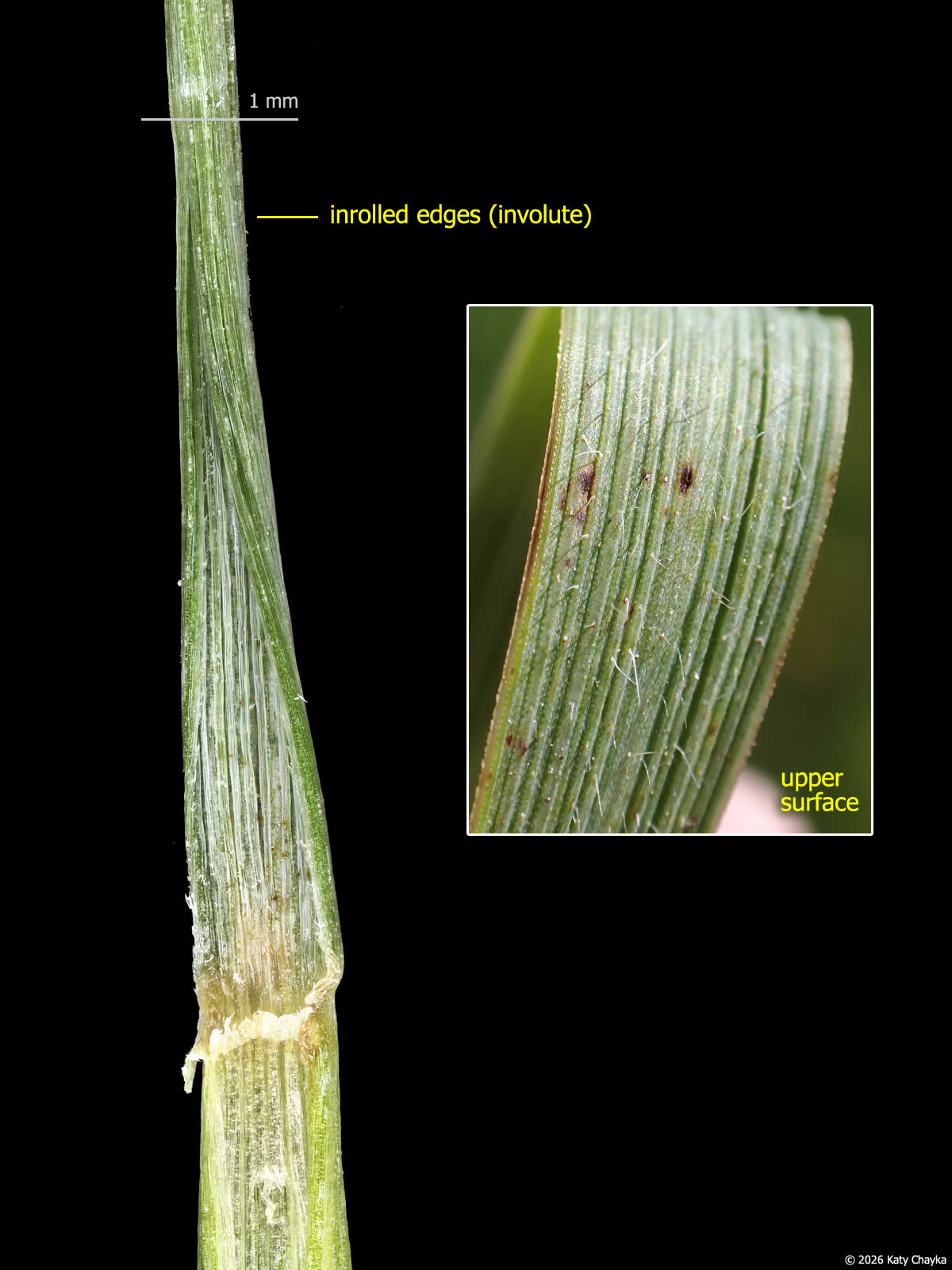 Leaves are alternate but mostly near the base, the few upper stem leaves stiff and ascending to spreading, up to 26 cm (10 inches) long, 1 to 4.5 mm (to 1/6 inch) wide, flat when fresh, the edges rolling in (becoming involute) when dry, usually hairless. The upper surface has 7 to 14 prominent raised veins and sometimes scattered long hairs.
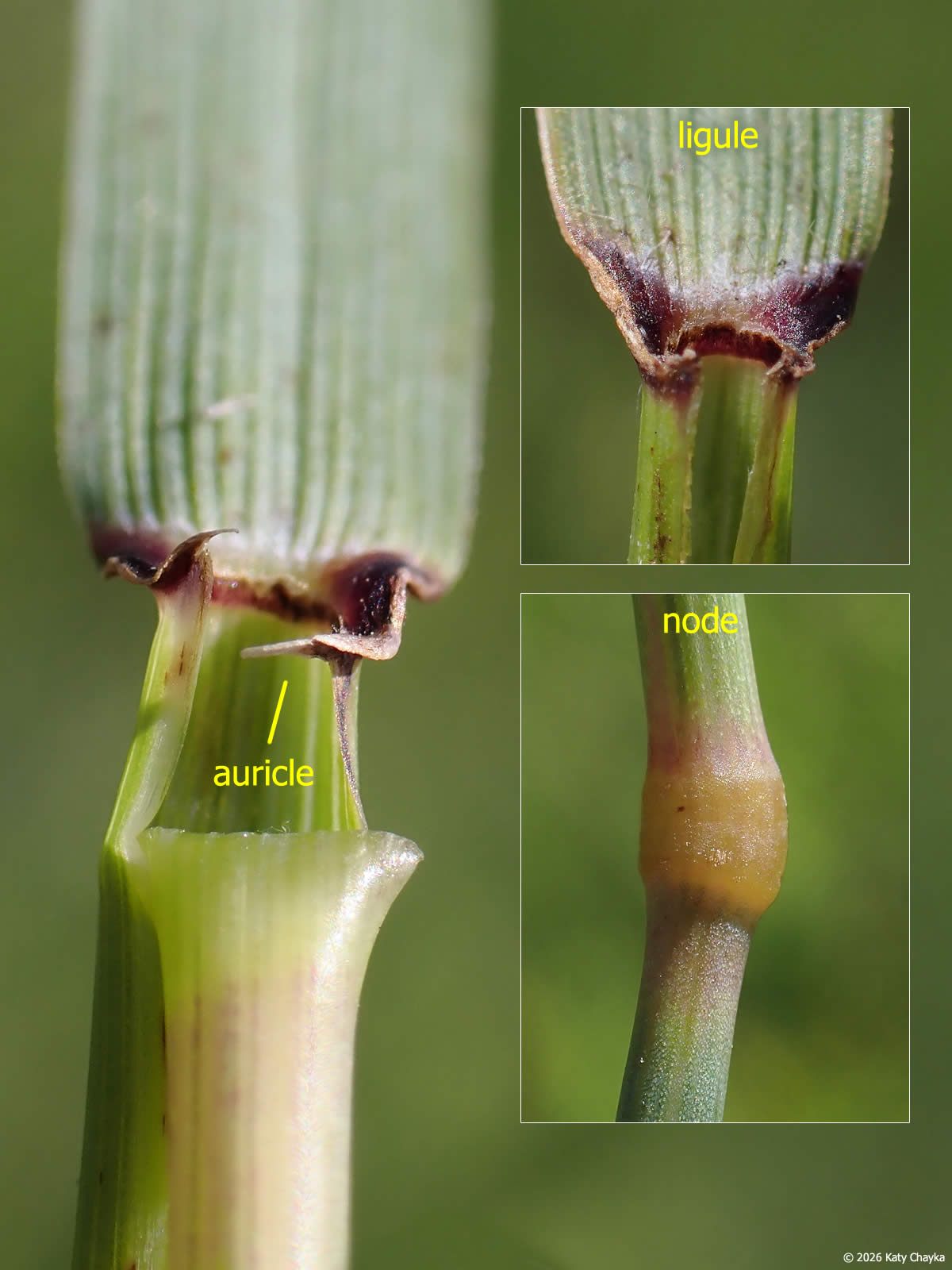 The sheath is hairless and has a pair of lobes (auricles) at the sheath apex that are commonly purple. The ligule (membrane where the leaf joins the sheath) is less than 1 mm long, more or less straight across, and lacks a fringe of hairs. Nodes are hairless. Stems are unbranched, hairless, usually erect, single or a few from the base, and can form large colonies from long spreading rhizomes. The whole plant has a blue-green cast.
Fruit:
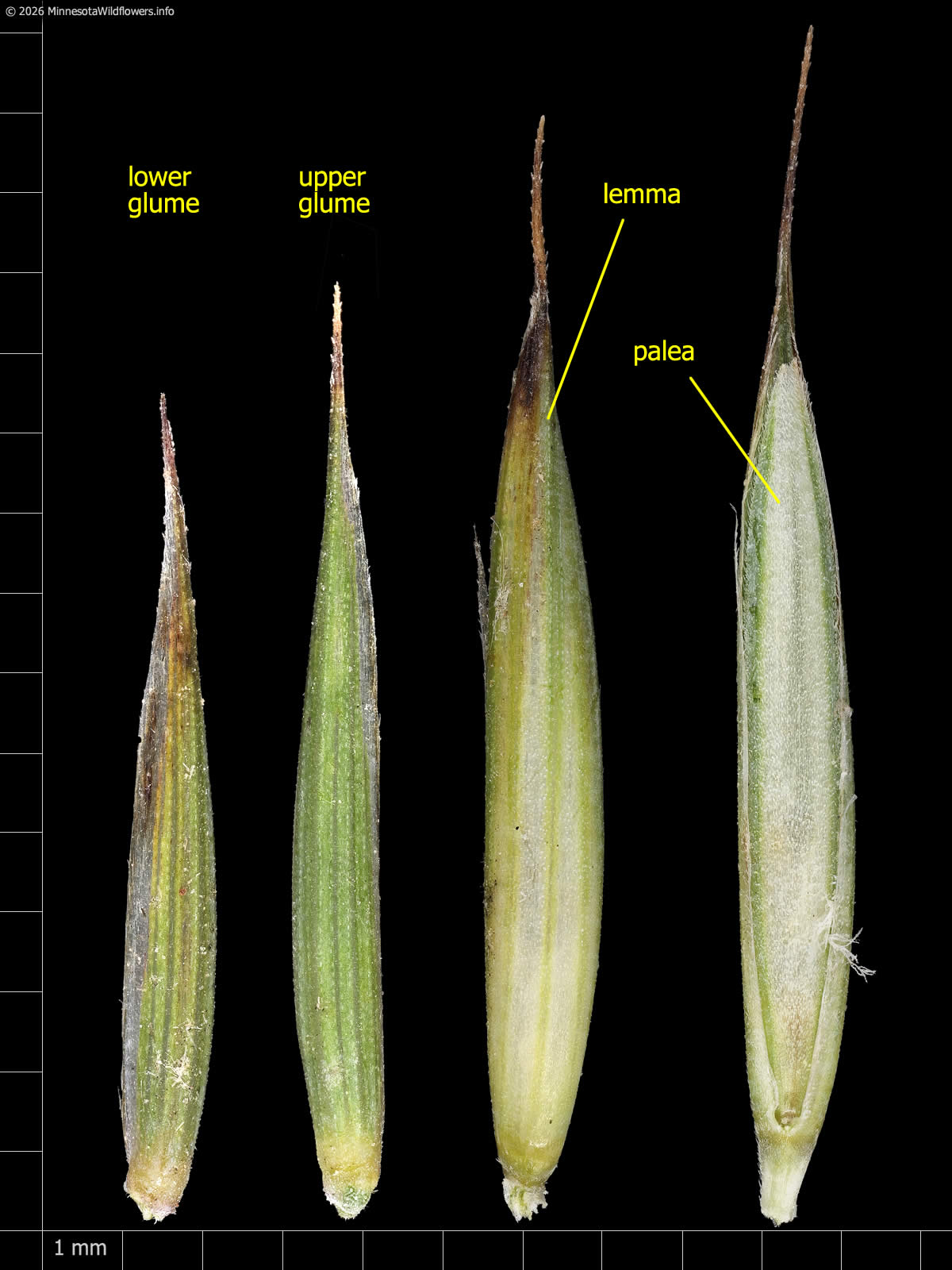 The awns remain straight as spikelets mature, all turning straw-colored to bleached tan when dry. Florets do not easily separate from the spikelet; the entire spikelet drops off at maturity leaving a naked stem behind. Grains (seeds) are elliptic with a tuft of white hairs at the tip.
Notes:
Western Wheatgrass, known as Agropyron smithii in older references and Elymus smithii in some others, is an occasional species in Minnesota, where it reaches the eastern edge of its range; it's considered introduced east of the Mississippi River. In Minnesota it is most often found in the dry, sandy soils of prairies, railroad rights-of-way and dunes, but also in rock outcrops, gravel pits, river banks, and the occasional wet or wet-mesic prairie.
It strongly resembles the ubiquitous (and invasive) Quackgrass (Elymus repens): both are rhizomatous, have a single spike at the tip of the stem, spikelets usually single at the nodes, lemmas awned or not, the entire spikelet drops off at maturity, and Quackgrass may have a blue-green cast. Western Wheatgrass is more consistently blue-green, sheath auricles are commonly purple, the upper leaf surface is strongly veined, the leaf edges roll in when dry (becoming involute), and the spikelets can have as many as 12 florets, where Quackgrass leaves are not so prominently veined, stay fairly flat when dry, auricles are typically green or brown, and spikelets have max 7 florets.
Several references describe at what point the glumes taper to the tip (below the middle for Western Wheatgrass, above the middle for Quackgrass), but this is a really subtle distinction and not always easy to differentiate. The blue-green color and veiny leaves distinguish Western Wheatgrass from other similar Elymus and Agropygon species.
Native Plant Nurseries, Restoration and Landscaping Services ↓
Map of native plant resources in the upper midwest


More photos
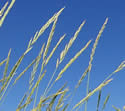 Western Wheatgrass plants
 scan showing leaf arrangement
 overlapping spikelets usually single at the nodes
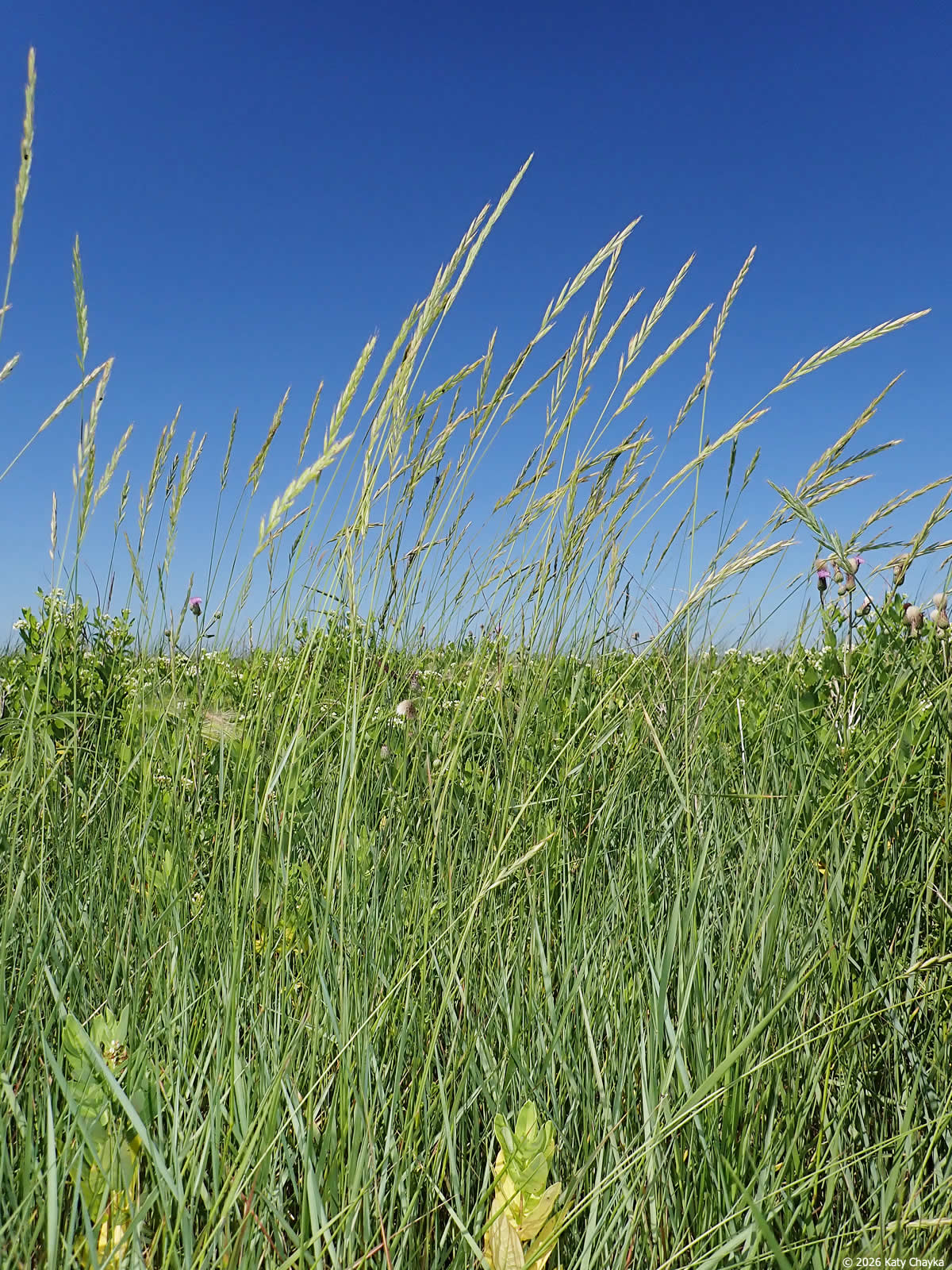 Western Wheatgrass plants
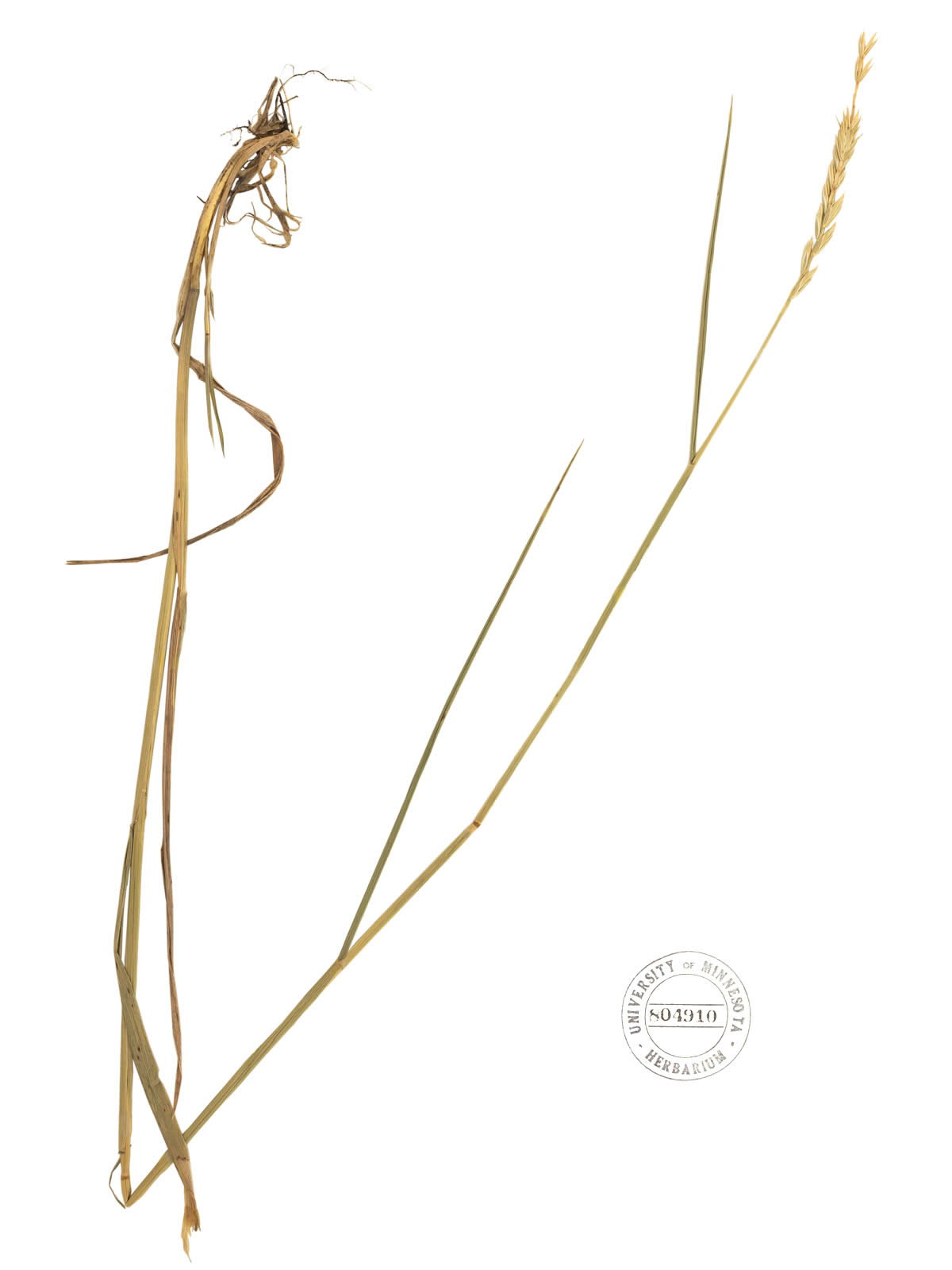 scan showing leaf arrangement
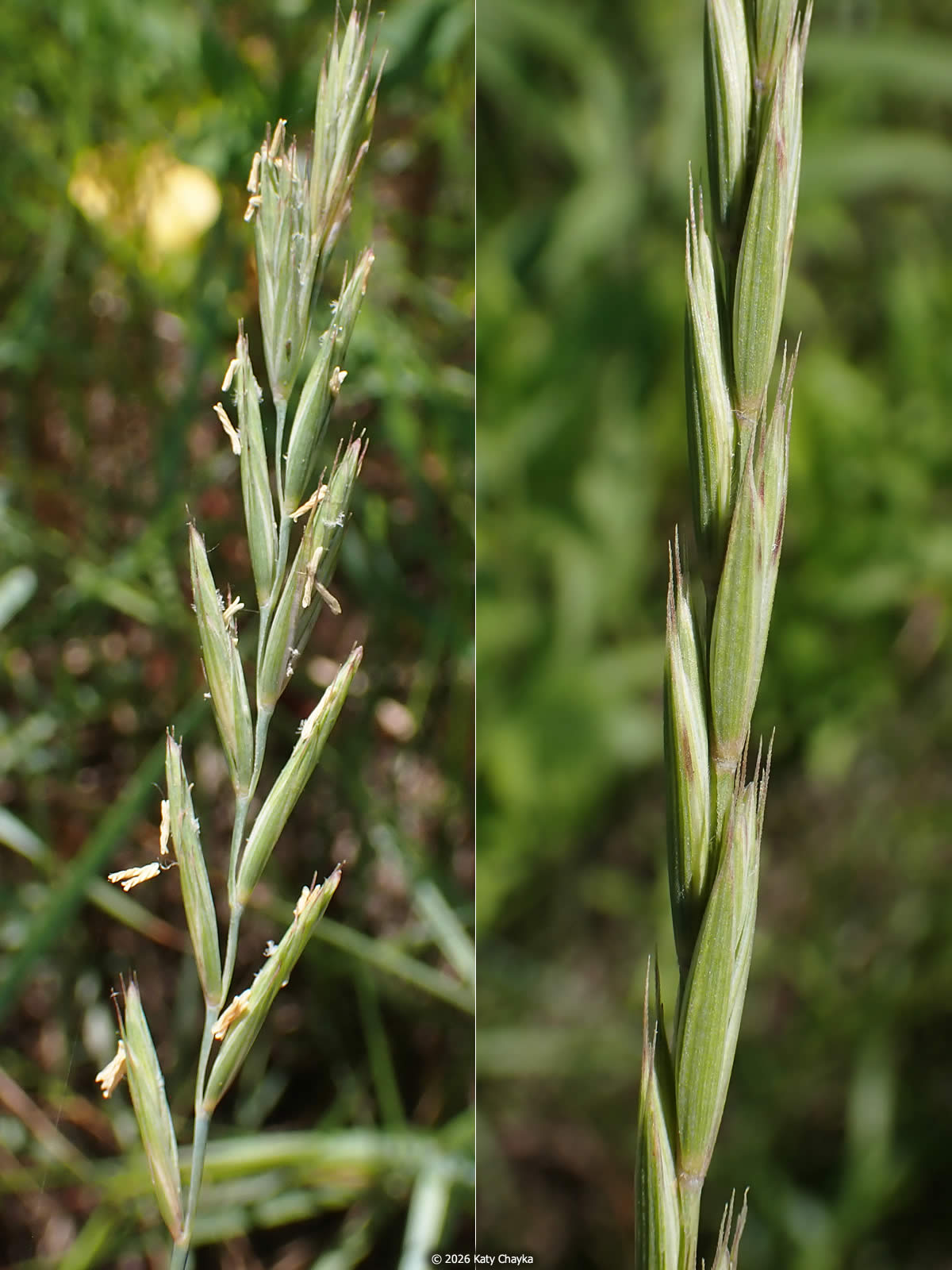 overlapping spikelets usually single at the nodes
Photos by K. Chayka taken in Otter Tail County.
Comments
Have you seen this plant in Minnesota, or have any other comments about it?