

Lysimachia maritima (Sea Milkwort)
| Also known as: | |
|---|---|
| Genus: | Lysimachia |
| Family: | Myrsinaceae (Myrsine) |
| Life cycle: | perennial |
| Origin: | native |
| Status: |
|
| Habitat: | sun; moist to wet alkaline or saline soil; prairies, meadows, marshes, roadsides, stream banks |
| Bloom season: | June - August |
| Plant height: | 2 to 12 inches |
| Wetland Indicator Status: | GP: OBL MW: OBL NCNE: OBL |
| MN county distribution (click map to enlarge): | 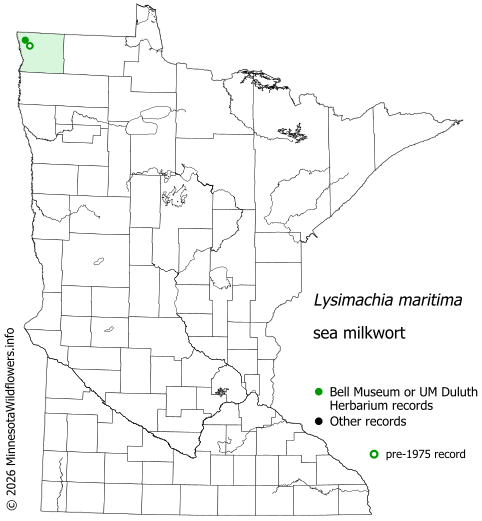 |
| National distribution (click map to enlarge): | 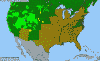 |
Pick an image for a larger view. See the glossary for icon descriptions.
Detailed Information
Flower: 
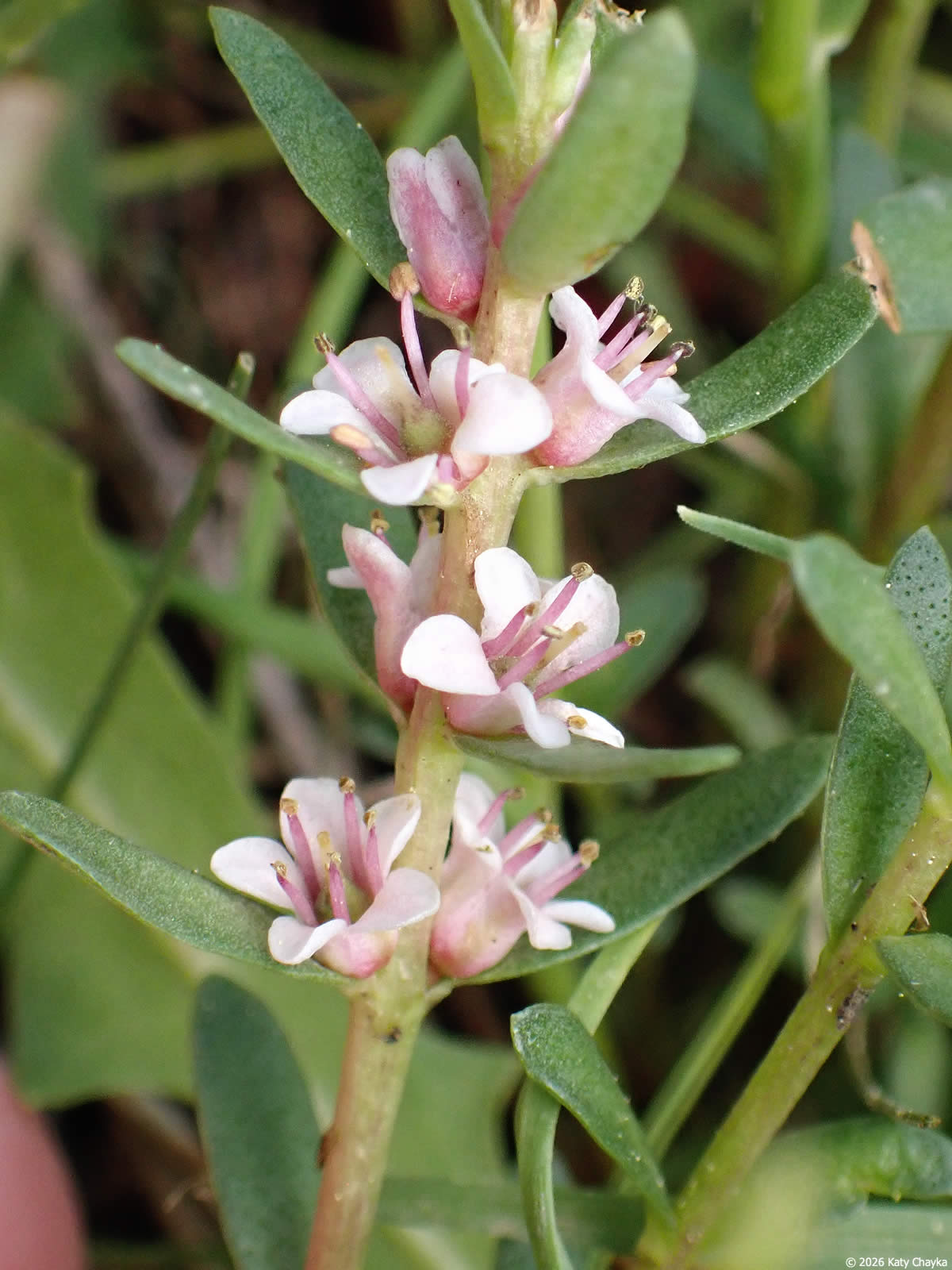 Flowers are single in the leaf axils on the upper stem, less than ¼ inch (to 5 mm) across and about as long as wide, bell-shaped with 5 spreading lobes alternating with 5 stamens extending out of the tube. Color ranges from white to pink to purplish. Flowers lack true petals but are made up of 5 petal-like sepals fused at the base, forming the tube.
Leaves and stems:
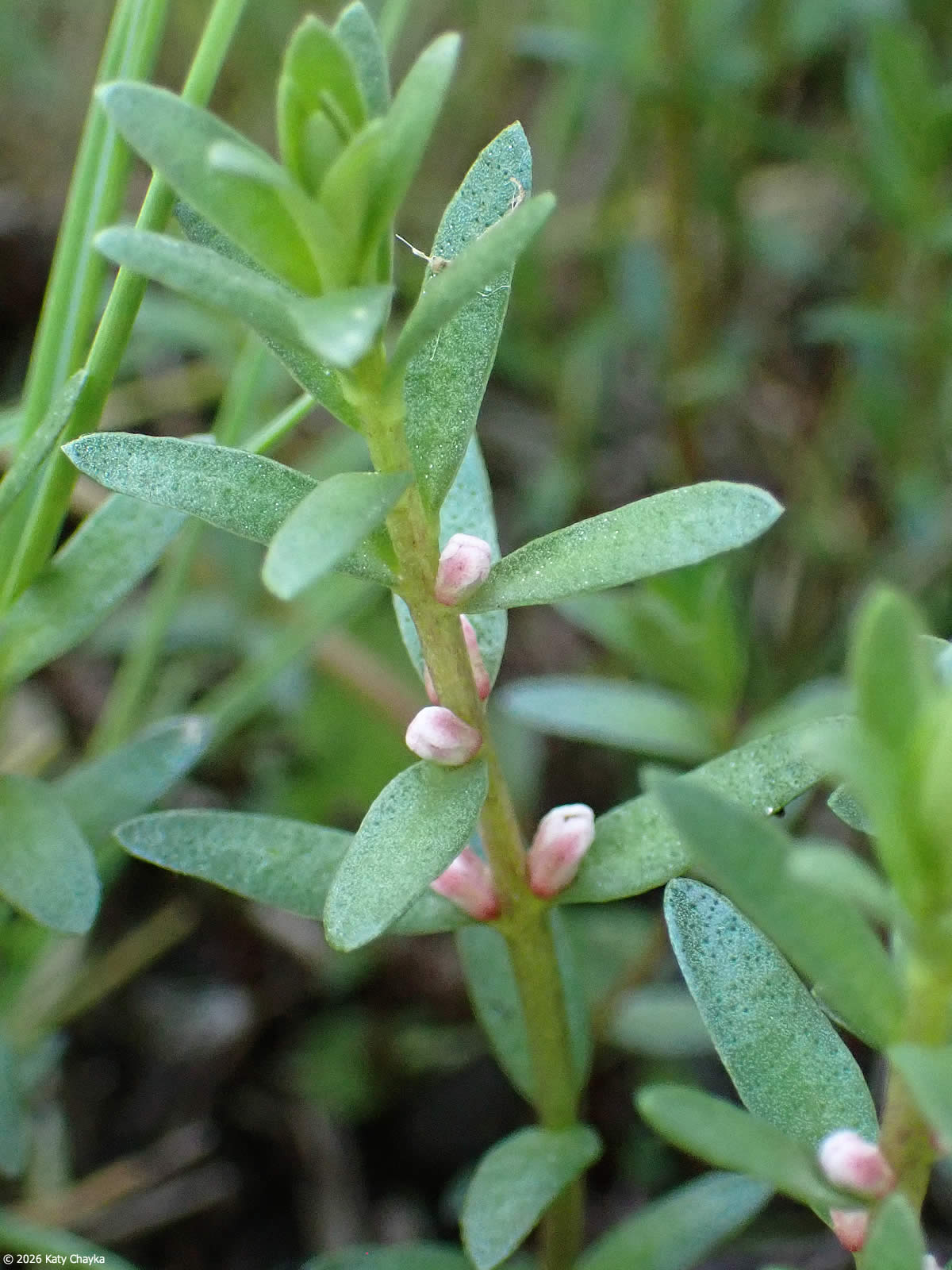 Leaves are opposite on the lower stem, becoming alternate towards the tip, somewhat fleshy, lance-elliptic to egg-shaped, up to ~½ inch (2 to 12 mm) long, ¼ to ~½ as wide, blunt to pointed at the tip, toothless, hairless, stalkless. The upper surface is variously dotted with salt glands that secrete excess salt absorbed from the soil. Stems are prostrate to erect, branched or not, hairless. Colonies often form from spreading rhizomes.
Fruit:
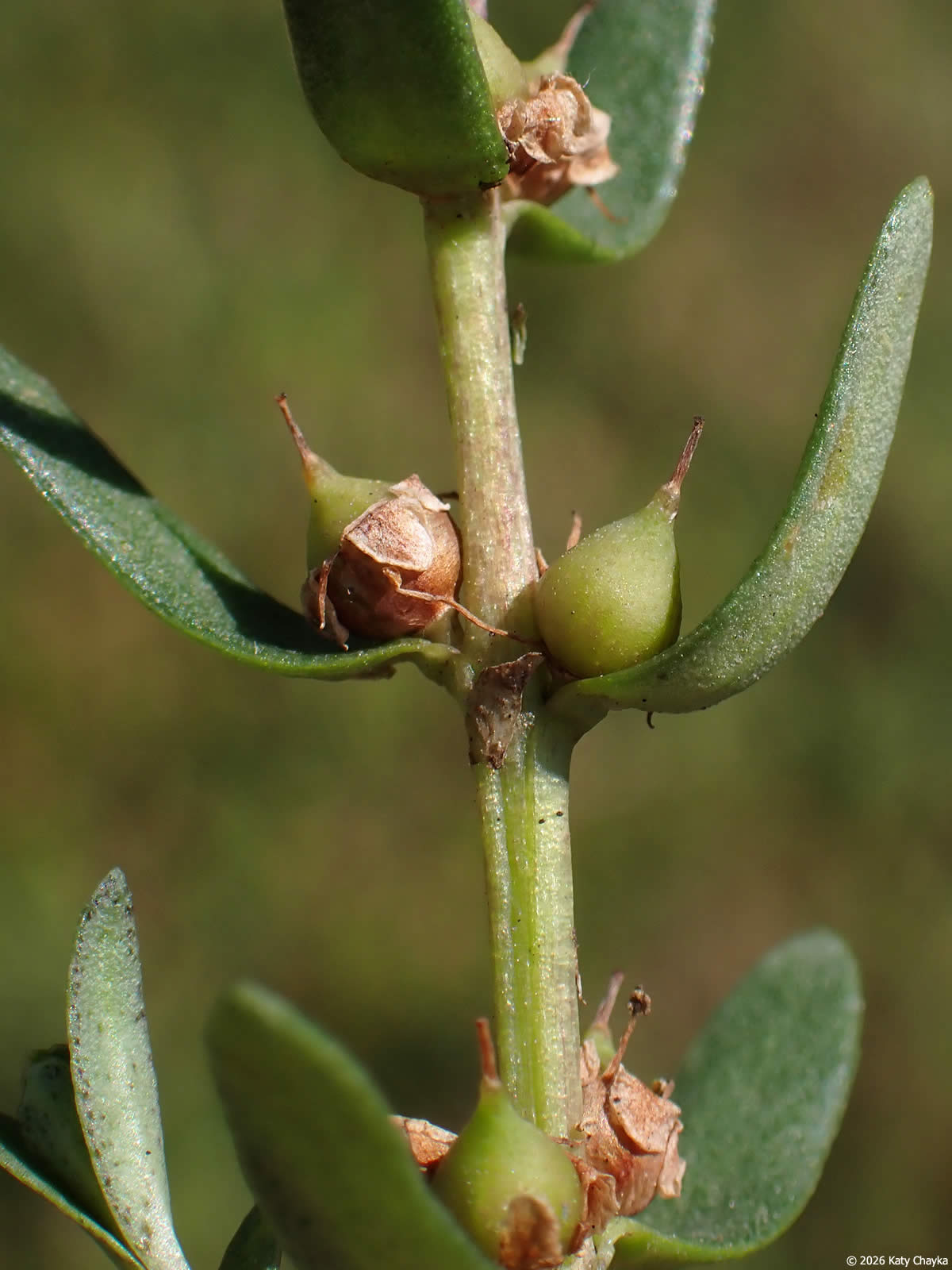 Fruit is a smooth, teardrop-shaped capsule 2.5 to 3.5 mm long, maturing from green to brown, containing several seeds.
Notes:
Sea Milkwort is very rare in Minnesota, to-date only recorded twice, both in Kittson County within a few miles of each other. It has a split North American distribution, with most populations to our west, where we sit at the eastern edge of its range. It is also present in coastal areas of New England and across Canada and northern Eurasia. The preferred habitat is moist to wet salty or alkaline soil and can be found in salt marshes, wet meadows and prairies, and salty roadsides that get adequate moisture. According to the DNR, the amount of suitable habitat in Minnesota has greatly diminished due to conversion for crop production. Originally designated a Special Concern species in 1984, it was elevated to Endangered in 1996.
Sea Milkwort is typically short, only a few inches tall, with small, bell-shaped, pinkish flowers single in the leaf axils, on a leafy stem, and can form large colonies. When flowering or fruiting it is unlikely to be confused with anything else. Vegetative stems are somewhat similar to Bastard Toadflax (Comandra umbellata), which can be similar in height with leafy stems and forms colonies, but its leaves are larger (up to 2 inches long), thin (not fleshy) and lack the dotted surface, plus its flowers and fruits are clustered at stem tips.
Note that Sea Milkwort hasn't been recorded in Minnesota since 1992; the images here were taken in the Grand Forks area of North Dakota. Being that close to the Minnesota border gives me some hope it may be found here again, likely somewhere in or near the Red River valley. Also of note is I had noticed the dotted leaf surface on virtually all leaf images from across the US, but found no description of this characteristic in any of the usual references, only on the DNR's rare species page. Curious...
Native Plant Nurseries, Restoration and Landscaping Services ↓
Map of native plant resources in the upper midwest


More photos
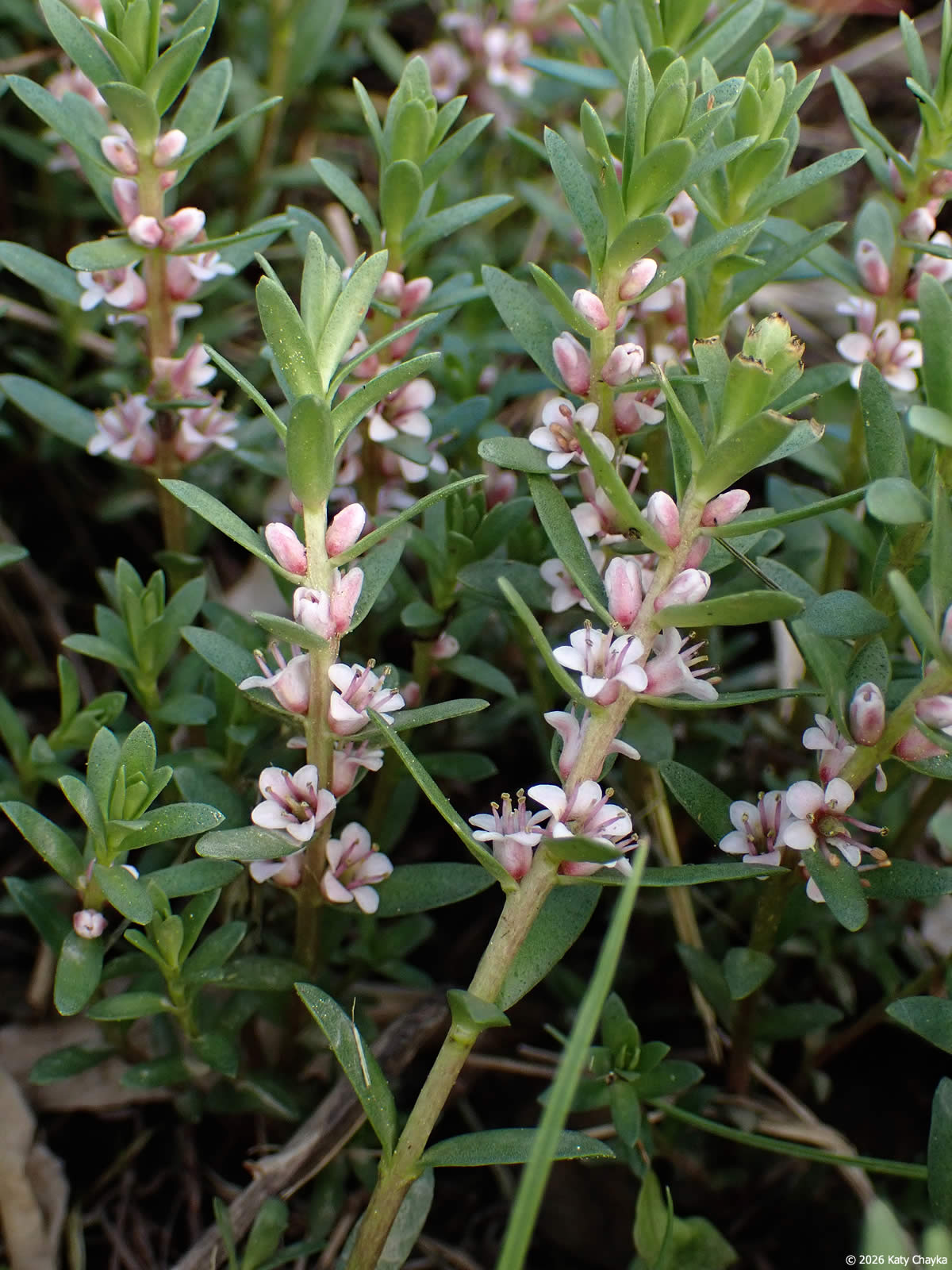 Sea Milkwort plants
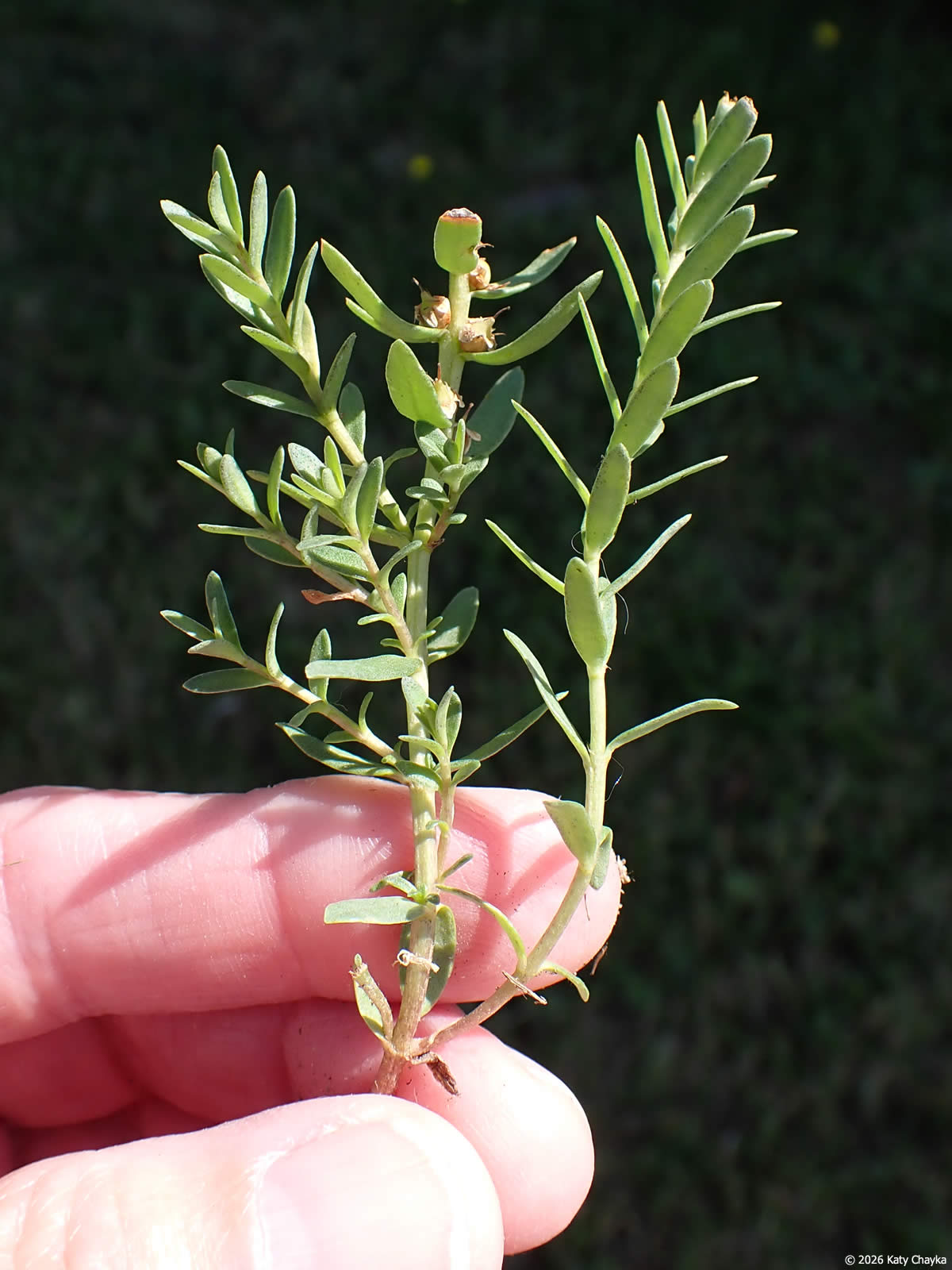 Sea Milkwort plant
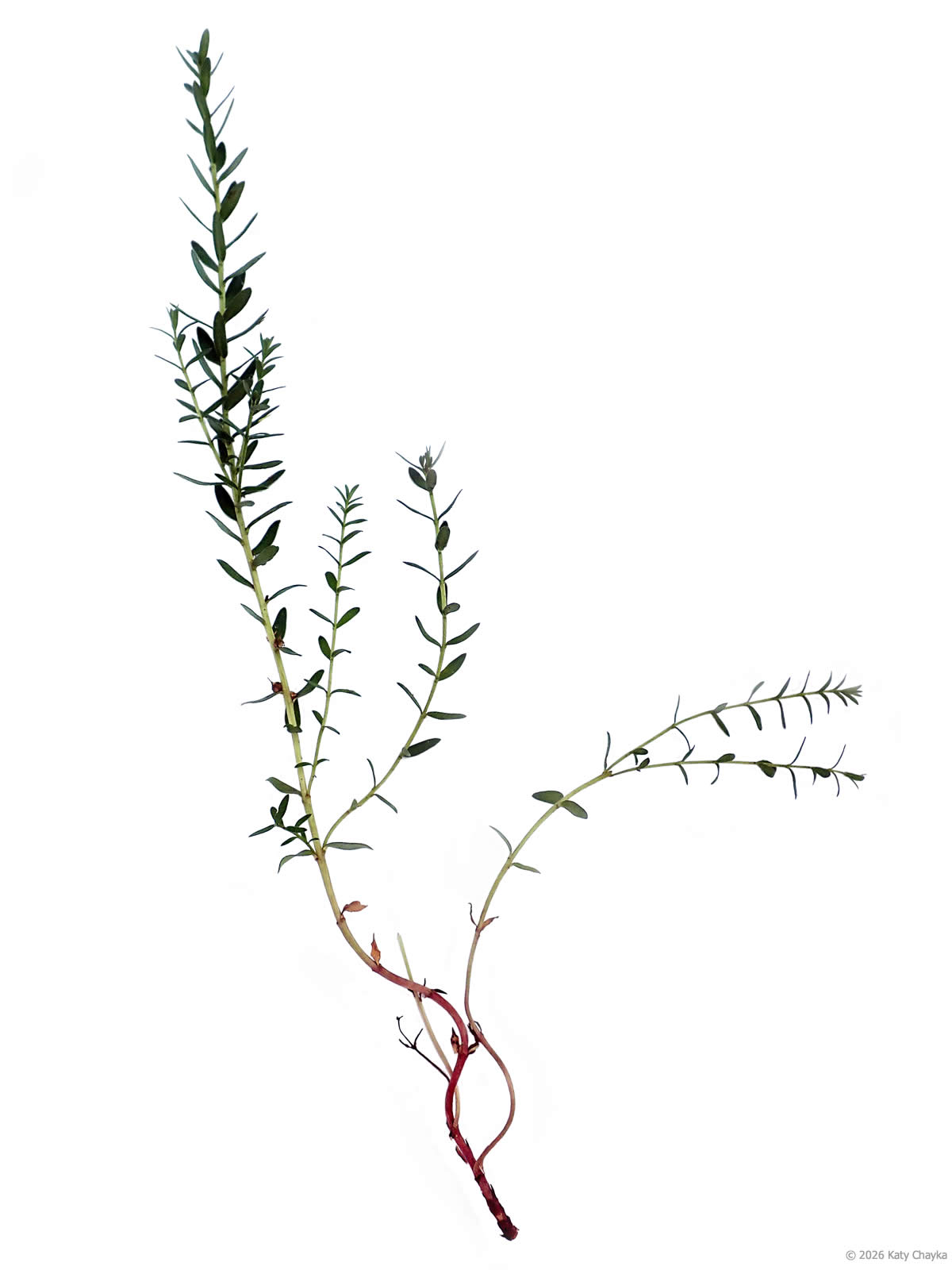 Sea Milkwort plant
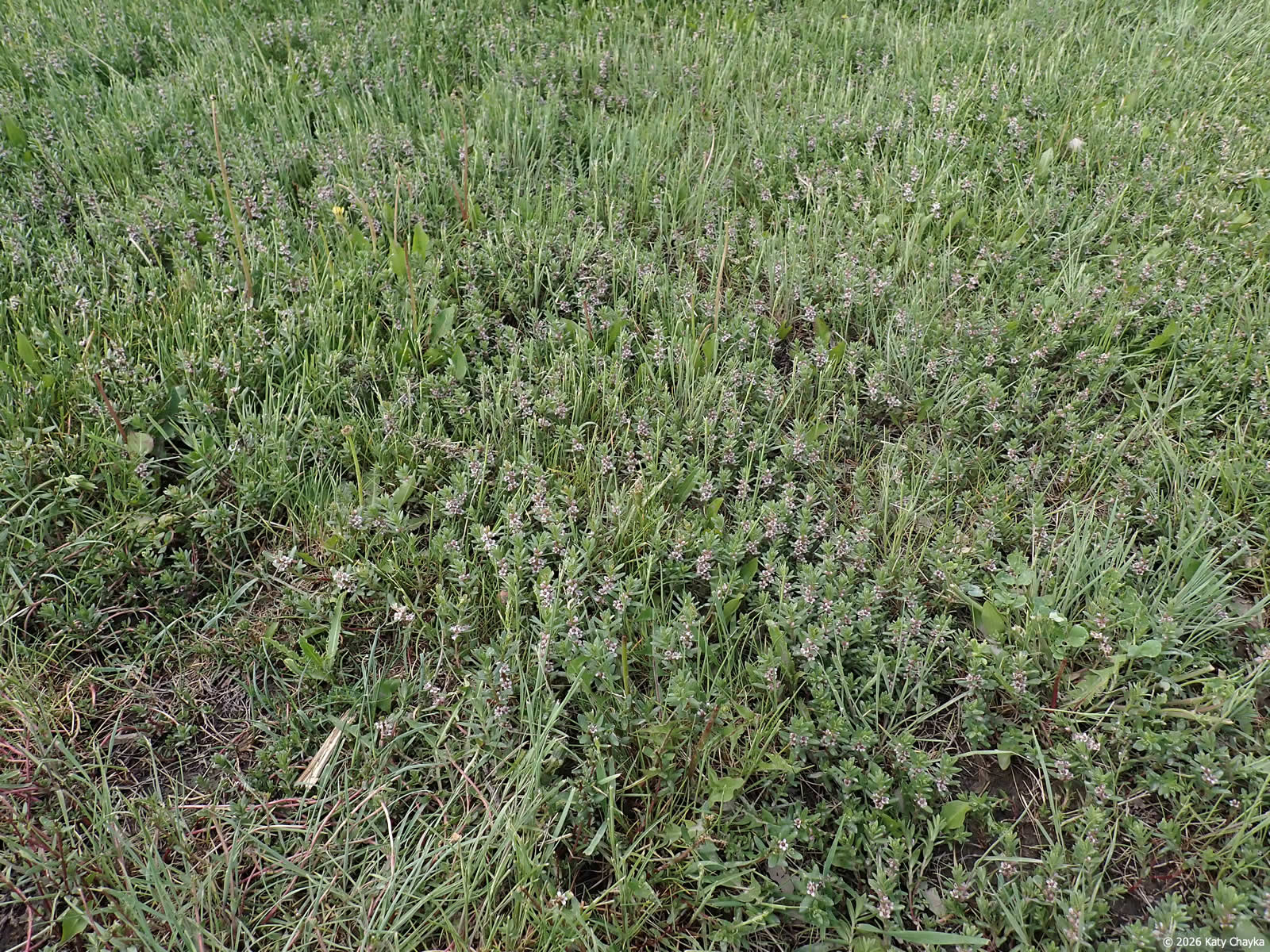 a colony of Sea Milkwort
Photos by K. Chayka taken in North Dakota.
Comments
Have you seen this plant in Minnesota, or have any other comments about it?