

Osmorhiza berteroi (Mountain Sweet Cicely)
| Also known as: | Chilean Sweet Cicely |
|---|---|
| Genus: | Osmorhiza |
| Family: | Apiaceae (Carrot) |
| Life cycle: | short-lived perennial |
| Origin: | native |
| Status: |
|
| Habitat: | part shade, shade; average to moist soil; deciduous and mixed forest |
| Bloom season: | June - July |
| Plant height: | 1 to 4 feet |
| Wetland Indicator Status: | GP: FACU MW: FACU NCNE: FACU |
| MN county distribution (click map to enlarge): | 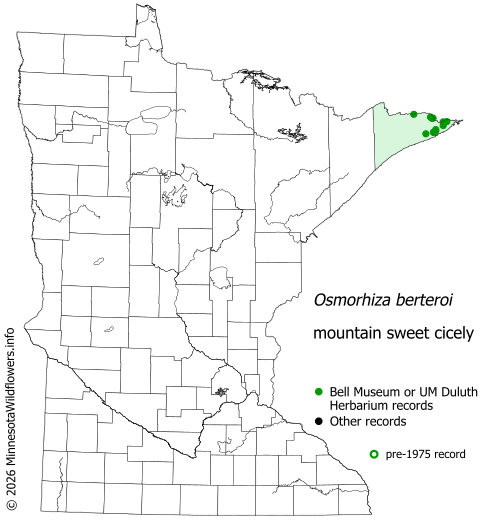 |
| National distribution (click map to enlarge): | 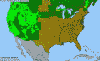 |
Pick an image for a larger view. See the glossary for icon descriptions.
Detailed Information
Flower: 
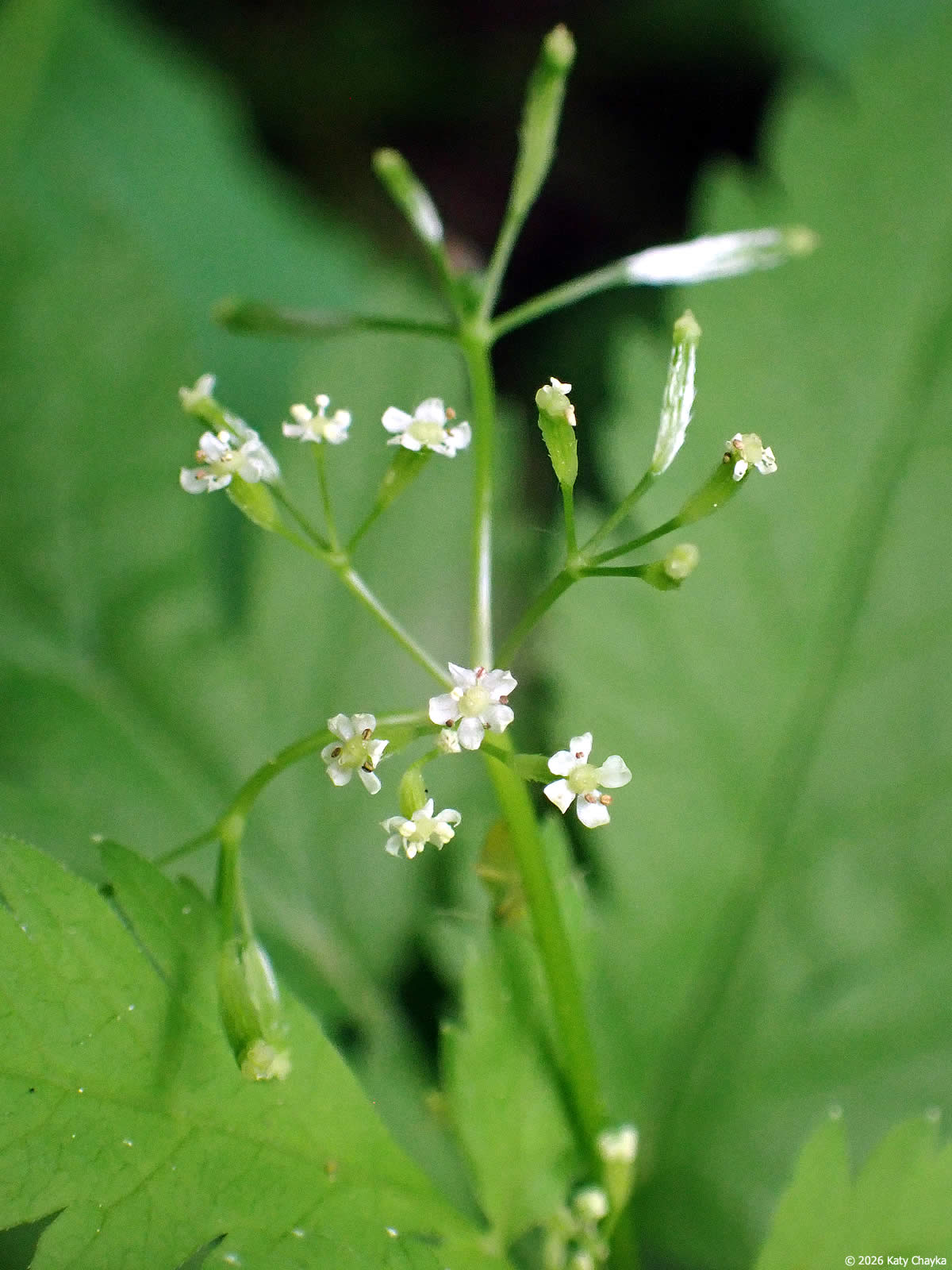 Flowers are in flat clusters (umbels), in 3 to 8 groups (umbellets) of up to 8 flowers each, at the top of the plant and arising from the upper leaf axils. Most umbellets have 1 to 4 staminate (male) flowers in the center and perfect flowers (both male and female parts) in the outer ring. Individual flowers are less than 1/8 inch (~2 mm) across, with 5 white petals and 5 white-tipped stamens. Perfect flowers have 2 tiny, nub-like styles and a hairy, cone or club-shaped structure between the flower and stalk that develops into fruit. Rarely, 1 or 2 tiny lance-linear bracts are at the base of umbels or umbellets but these are usually absent.
Leaves and stems:
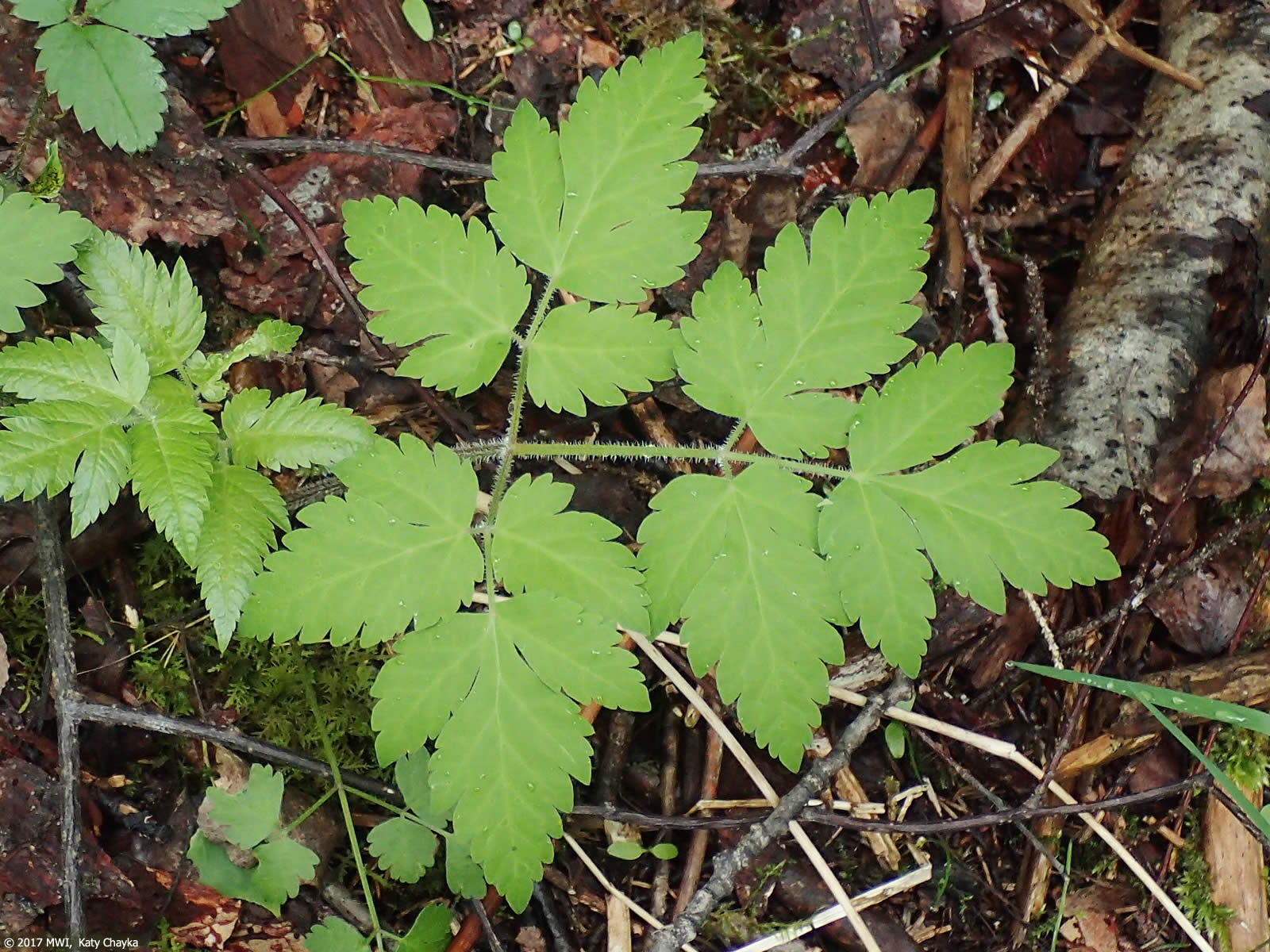 Leaves are basal and alternate, twice compound in groups of 3. Basal and lower stem leaves are long stalked, becoming shorter stalked as they ascend the stem. The terminal leaflet is largest, 1 to 3½ inches (3 to 9 cm) long and up to 2 inches wide, shallowly to deeply lobed with coarsely toothed edges, becoming smaller and less lobed as they ascend the stem.
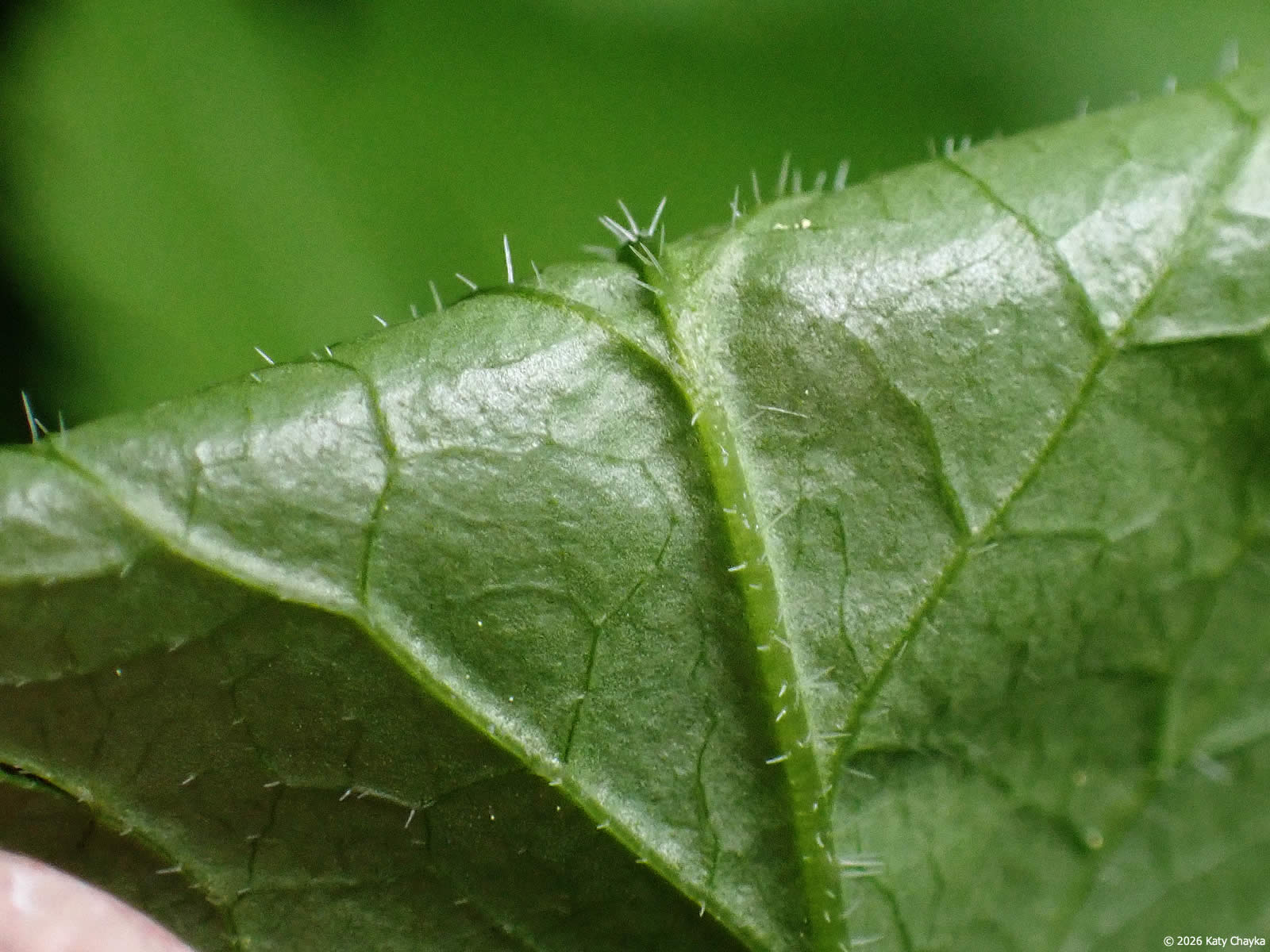 The upper surface is mostly hairless, the lower sparsely hairy, especially along the veins on the underside; stalks are similarly hairy or smooth. Stems are 1 or 2 from the base, branched or not, smooth or variously covered in spreading hairs, sometimes hairy towards the base and smooth in the upper plant.
Fruit:
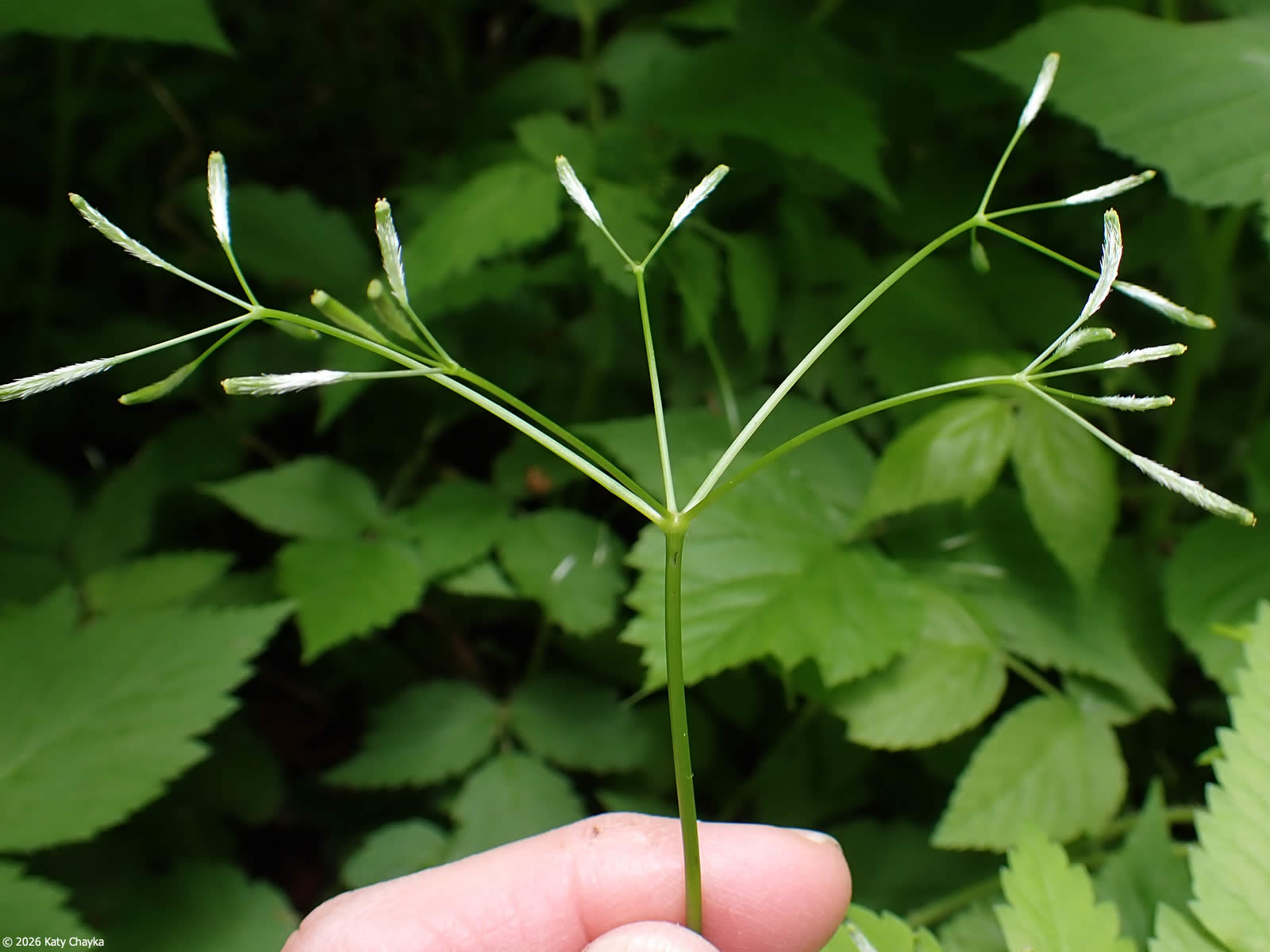 Umbel and umbellet stalks elongate as fruit develops. Fruit is slender, ½ to ~1 inch (12 to 25 mm) long, oblong to club-shaped but tapering at the base to a sharp point, ribbed with appressed hairs along the ribs and around the base. The remains of the nubby style persists at the tip. As it matures, the tip 1 to 2 mm compresses, forming a beak. It matures to brownish black and splits into 2 seeds when ripe.
Notes:
Mountain Sweet Cicely is rare in Minnesota, to-date found only in the old-growth forests of Cook County. Its native range is scattered, with the main populations in forests and mountain regions of western North America. Disjunct populations are around the Great Lakes and New England into eastern Canada, as well as in Chile and Argentina in South America.
According to the DNR, it was first recorded in Minnesota in 1870, but not seen again for more than 100 years, when it was found again near the original site. Biological surveys of recent decades have documented fewer than 20 sites. It was listed as Endangered in 1984 and is a Special Concern species in Wisconsin.
All 4 of the Osmorhiza species known to be in Minnesota are similar, may grow together, and when flowers or fruits are not present they can be difficult to distinguish, but flowers and fruits are the best way. The 2 very common species, Sweet Cicely (O. claytonii) and Aniseroot (O. longistylis) both have bracts at the base of umbels and umbellets, which Mountain Sweet Cicely lacks. Blunt-fruited Sweet Cicely (O. depauperata), also very rare, can only be reliably distinguished by its mature fruit, which is broadest at the tip and lacks the beak of Mountain Sweet Cicely.
Of note is that there are currently several herbarium records of O. depauperata from the vicinity of where we photographed this species. In fact, our original hunt there was for O. depauperata but the mature fruit doesn't lie. I wonder about those records now simply because they may have been based on immature fruit, which can look remarkably similar between the two. I did see with my own two eyes more than one fruit that looked more depauperata than berteroi, but others on the same plant left no doubt which it was. Methinks the area warrants re-inspection. Also of note is the documented bloom season is June-July, but it appears it's really only about 2 weeks total and may begin any time in June. Easy to miss that window.
Native Plant Nurseries, Restoration and Landscaping Services ↓
Map of native plant resources in the upper midwest


More photos
 Mountain Sweet Cicely plant
 Mountain Sweet Cicely plant
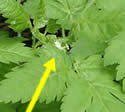 plants just coming into bloom
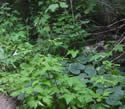 Mountain Sweet Cicely habitat
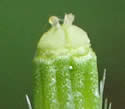 fruit in various stages of development
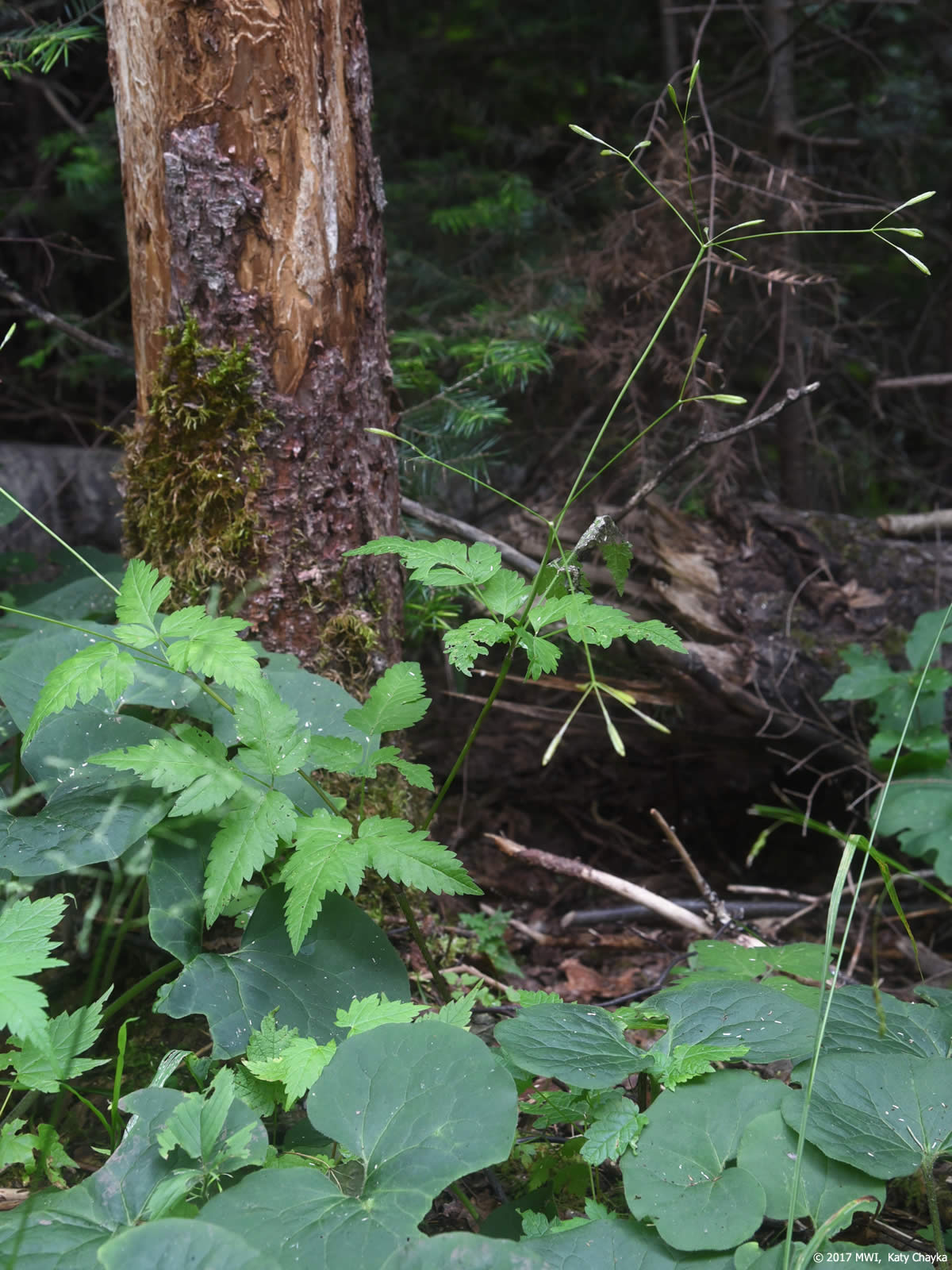 Mountain Sweet Cicely plant
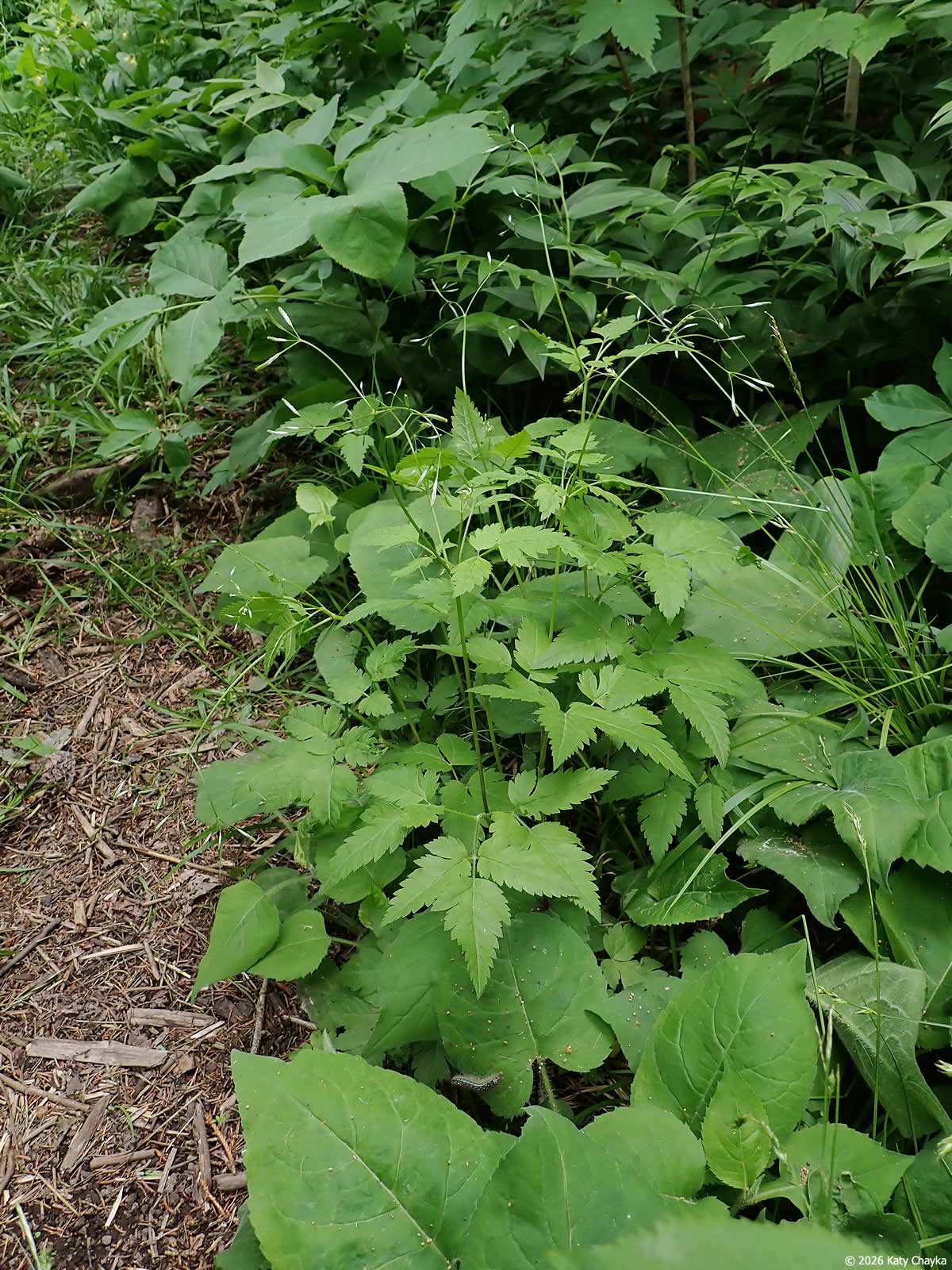 Mountain Sweet Cicely plant
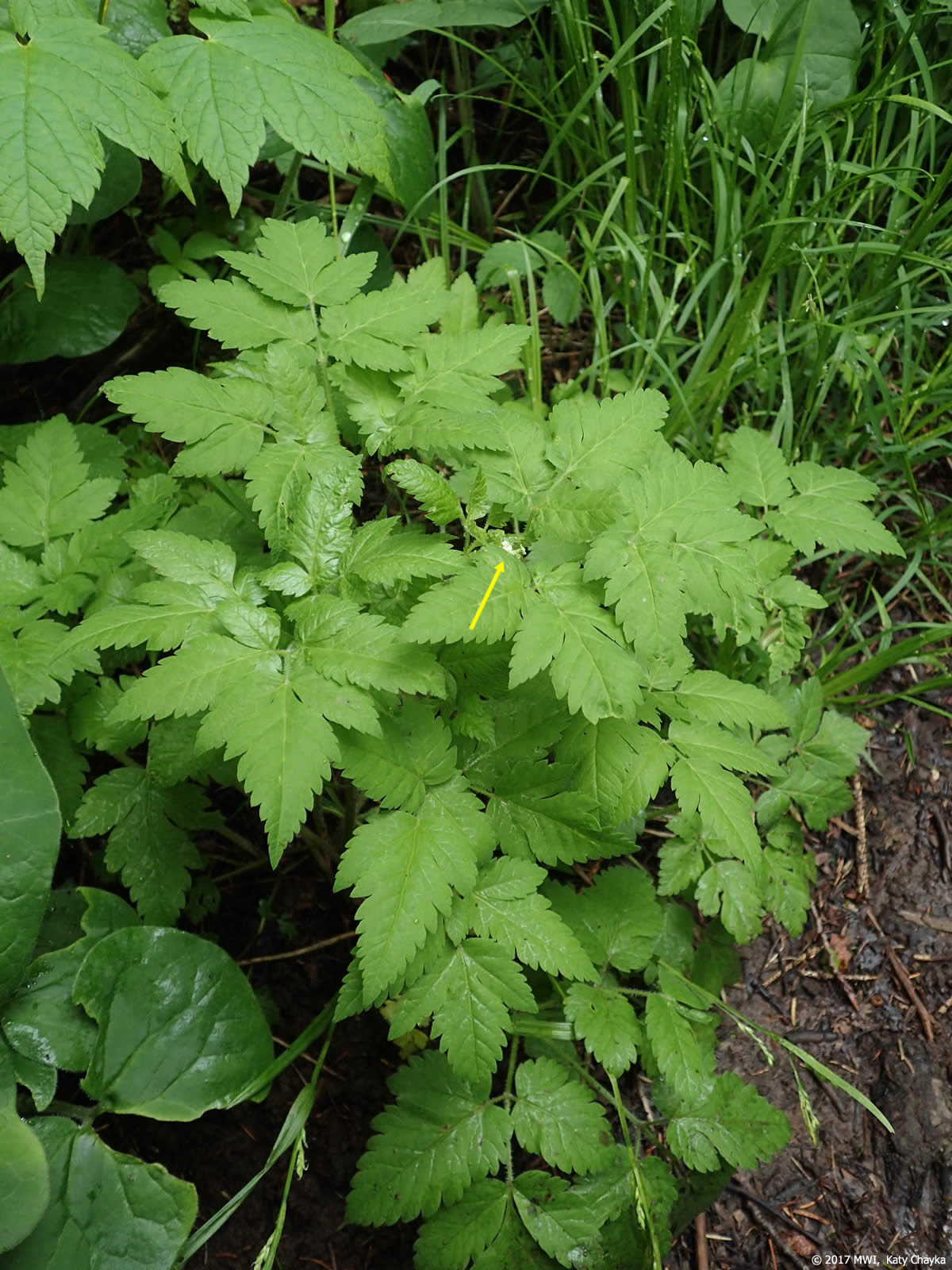 plants just coming into bloom
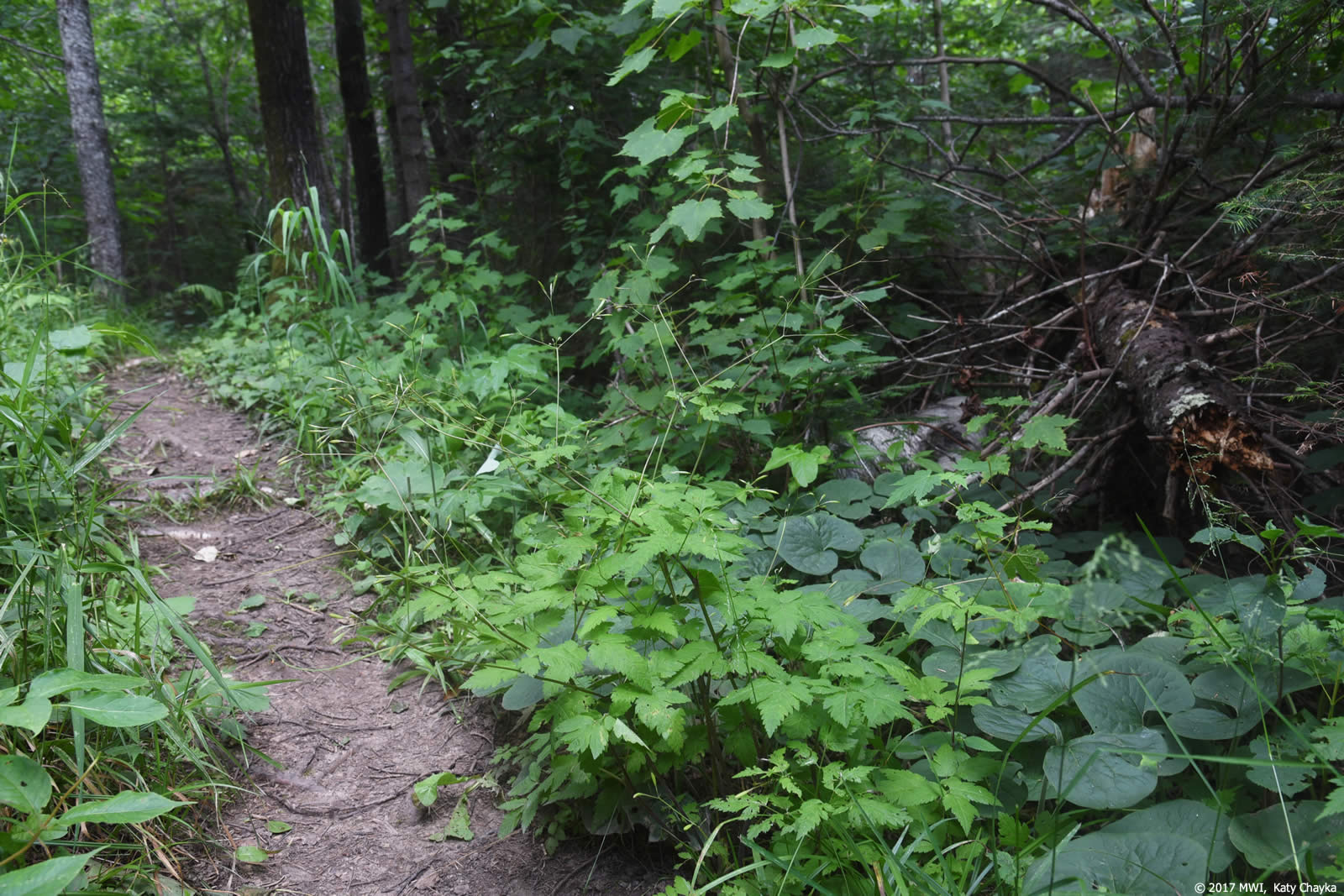 Mountain Sweet Cicely habitat
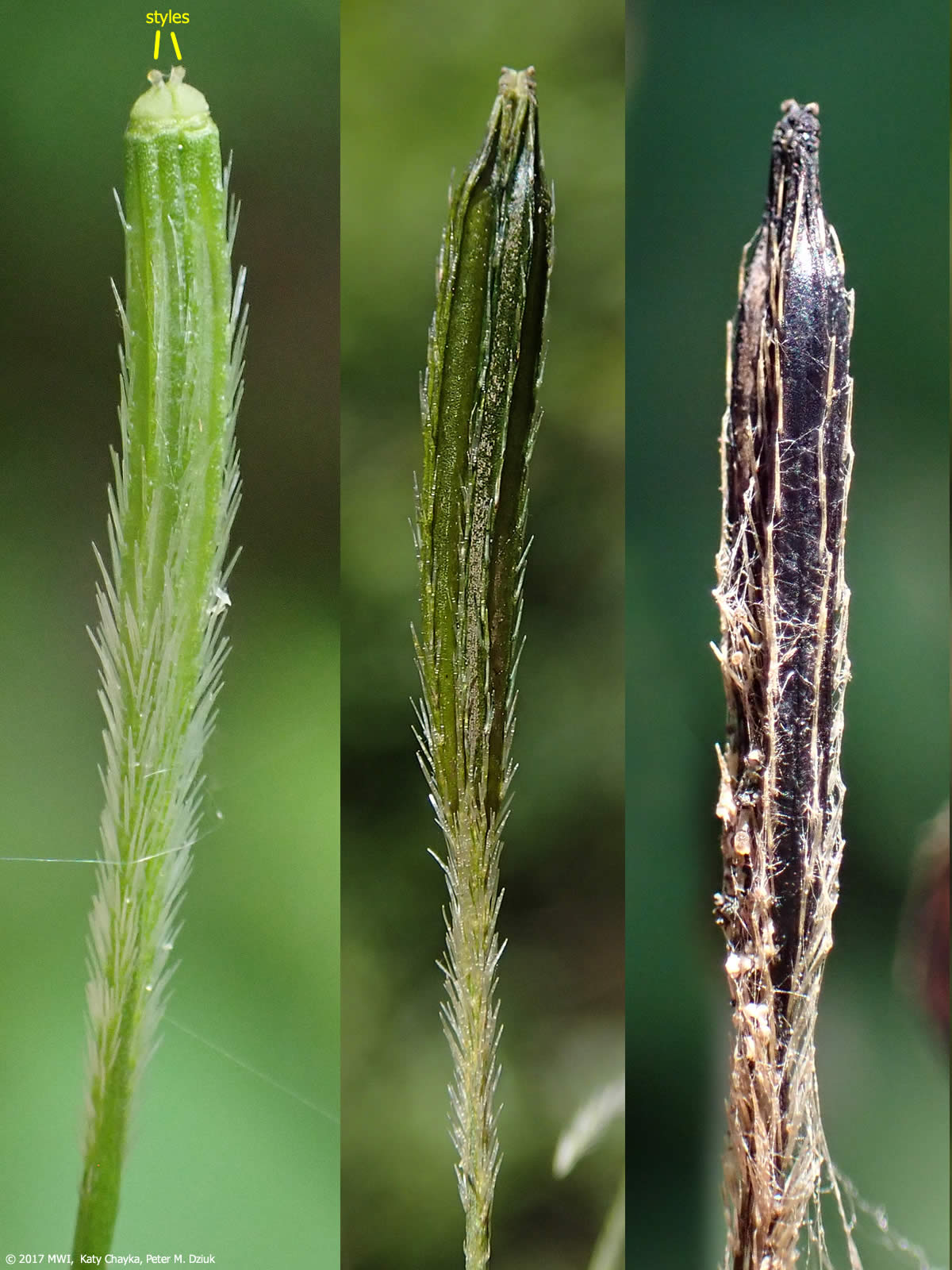 fruit in various stages of development
Photos by K. Chayka and Peter M. Dziuk taken in Cook County.
Comments
Have you seen this plant in Minnesota, or have any other comments about it?