

Phytolacca americana (American Pokeweed)
| Also known as: | Common Pokeweed, Pokeberry, Pigeonberry |
|---|---|
| Genus: | Phytolacca |
| Family: | Phytolaccaceae (Pokeweed) |
| Life cycle: | perennial |
| Origin: | Eastern half of North America |
| Habitat: | part shade, sun; average to moist soil; open woods, woodland edges, fencerows, old fields, trail edges |
| Bloom season: | July - October |
| Plant height: | 1 to 12 feet |
| Wetland Indicator Status: | GP: FACU MW: FACU NCNE: FACU |
| MN county distribution (click map to enlarge): | 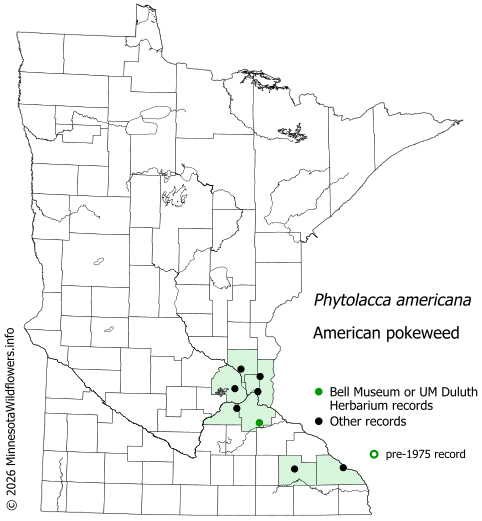 |
| National distribution (click map to enlarge): | 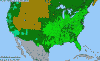 |
Pick an image for a larger view. See the glossary for icon descriptions.
Detailed Information
Flower: 
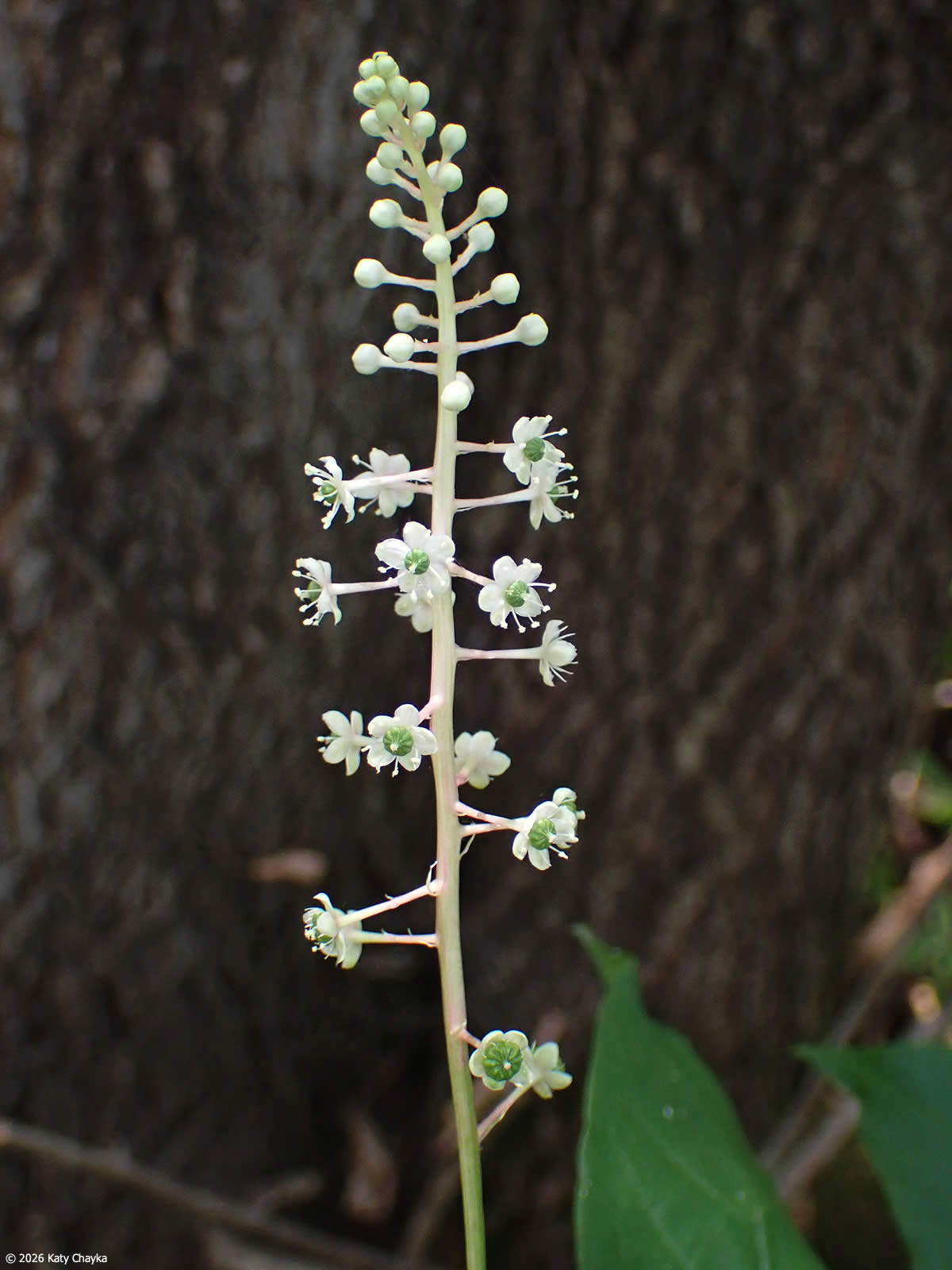 Erect to drooping raceme 3 to 12 inches long arising opposite a leaf and at the tips of branching stems, the flowers spirally arranged around the central stalk and blooming from the bottom up. Flowers are ~¼ inch across, lack true petals but made up of 5 petal-like sepals. Color ranges from greenish white to pink to purplish. In the center are 10 white stamens surrounding a mound of green carpels. Flower stalks are up to ½ inch (3 to 13 mm) long and hairless.
Leaves and stems:
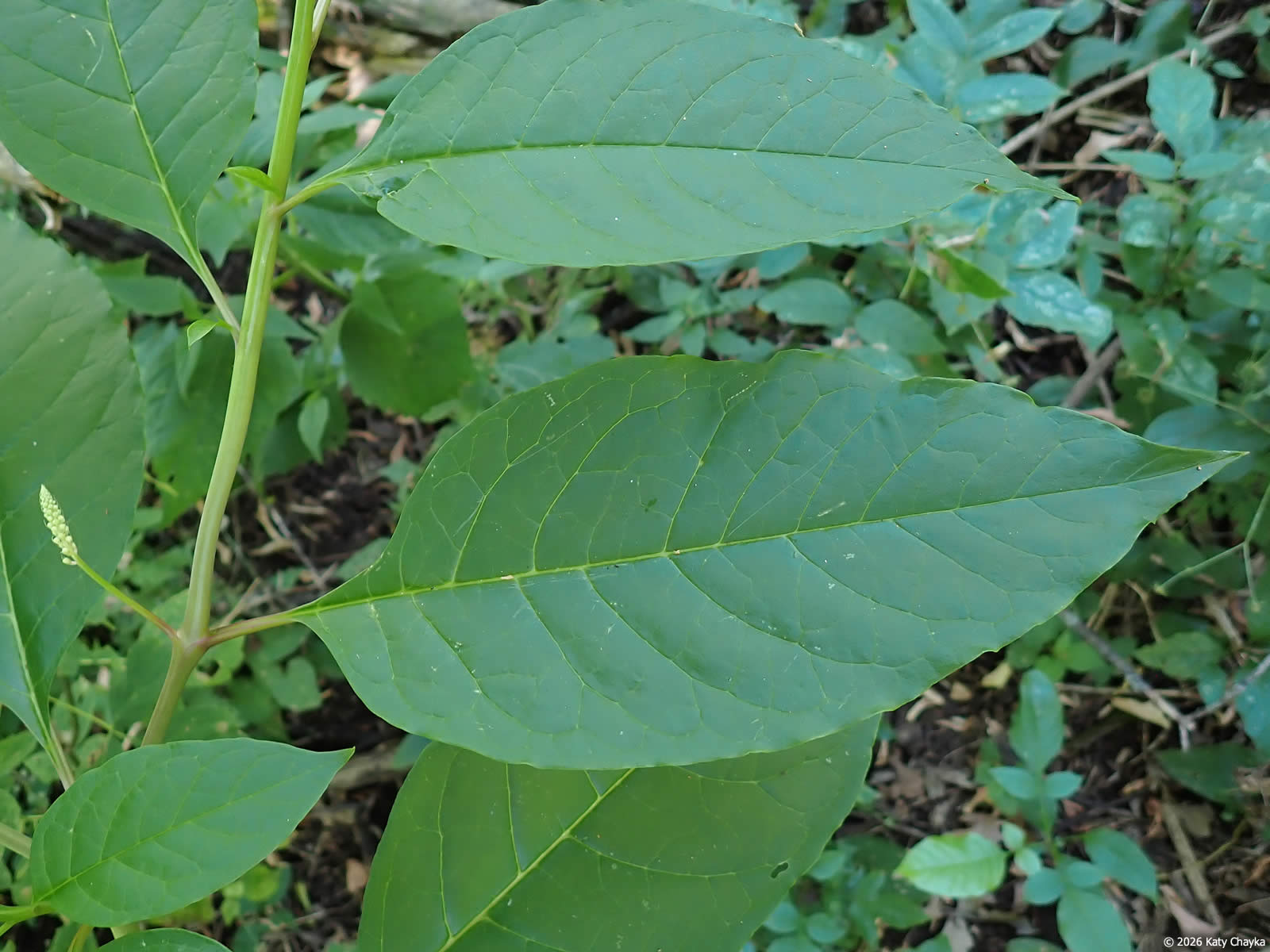 Leaves are alternate, 2 to 12+ inches (to 35 cm) long, up to 7 inches (18 cm) wide, lance to egg-shaped, tapering to a pointed tip, rounded to heart-shaped at the base, toothless, hairless, on a stalk up to ~2½ inches (1 to 6 cm) long. Stems are single or multiple from the base, stout, branching, hairless, turning pinkish to purplish with maturity. Leaves and stems have an unpleasant odor when crushed.
Fruit:
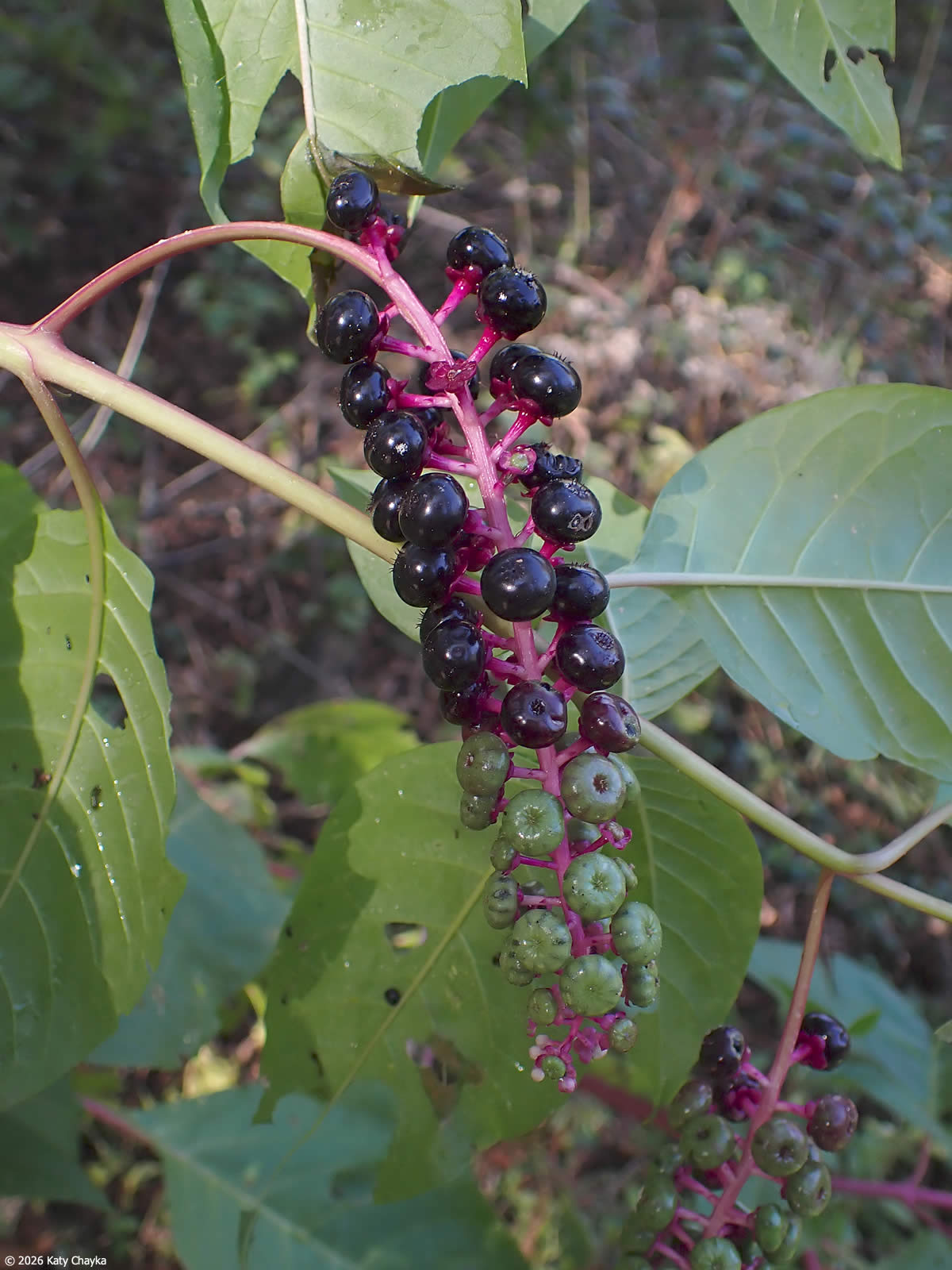 Fruit is a berry averaging 1/3 inch (6 to 11 mm) diameter, maturing from green to purple-black, containing shiny, black, lens-shaped seeds.
Notes:
Pokeweed is native to most of the eastern half of North America, and most references call it native to Minnesota, the western edge of its range; an old Briton and Brown text is cited as the source of this claim. However, there are no records of it here except for what appear to be introductions (including the lone herbarium record from 2018), volunteering in disturbed soils such as gardens, old fields, roadsides and trail edges, likely deposited there by birds that consume the fruit. The closest natural populations are in southern Wisconsin, barely reaching the northeastern edge of Iowa.
It is fairly easy to identify from the flower clusters emerging opposite the leaves as well as at branch tips, the dark purple berries, and large, alternate, toothless and hairless leaves. It starts blooming in mid-summer but can put out new flower clusters into fall. New plants may only reach a foot tall, but after a few years can grow bushy, to 6 feet or more tall, and older plants in ideal conditions reaching as much as 12 feet. I saw some of this where these photos were taken; the most mature plants were about 4 feet tall, with a mix of ripening fruit and new flower clusters. But at least 2 dozen more were within spitting distance all averaging about 1 foot tall, most of which managed to produce a flower cluster at the stem tip. On its way to bigger infestation...?
Note that all parts of the plant are toxic, but apparently also have numerous medicinal uses. There are 2 recognized varieties: var. rigida, restricted to the southeast in the Gulf of Mexico and Atlantic coastal areas, has short (4 inches or less), all erect racemes with short (1 to 6 mm) flower/fruit stalks, and var. americana, present across the range, has longer (to 12 inches), erect to drooping racemes with longer (6 to 13 mm) flower/fruit stalks.
Native Plant Nurseries, Restoration and Landscaping Services ↓
Map of native plant resources in the upper midwest


More photos
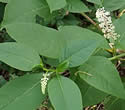 Pokeweed plant
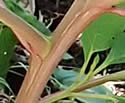 stems are stout, typically turn red/pink/purple
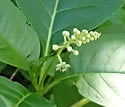 juvenile (first year?) plant putting out a flower cluster
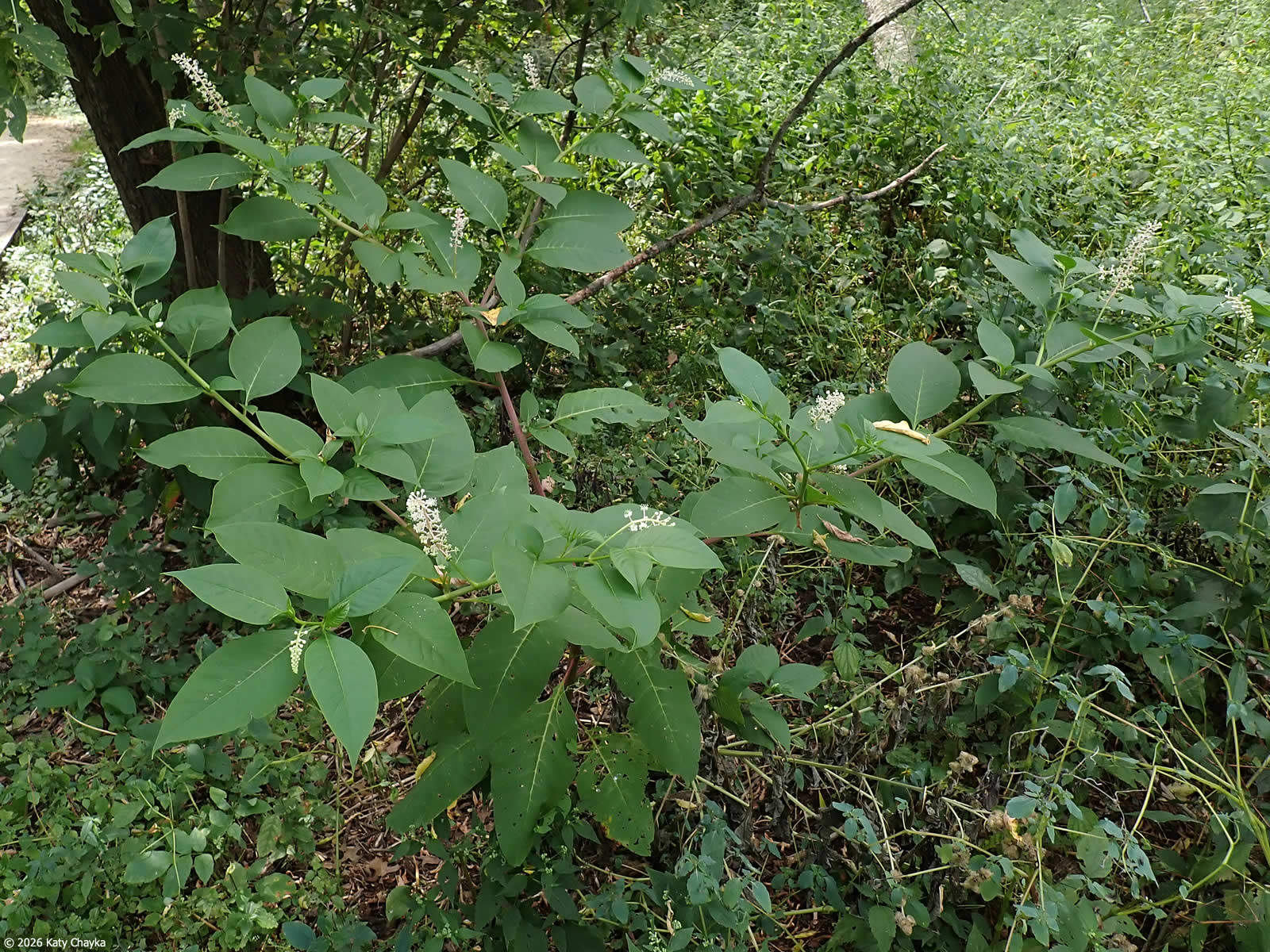 Pokeweed plant
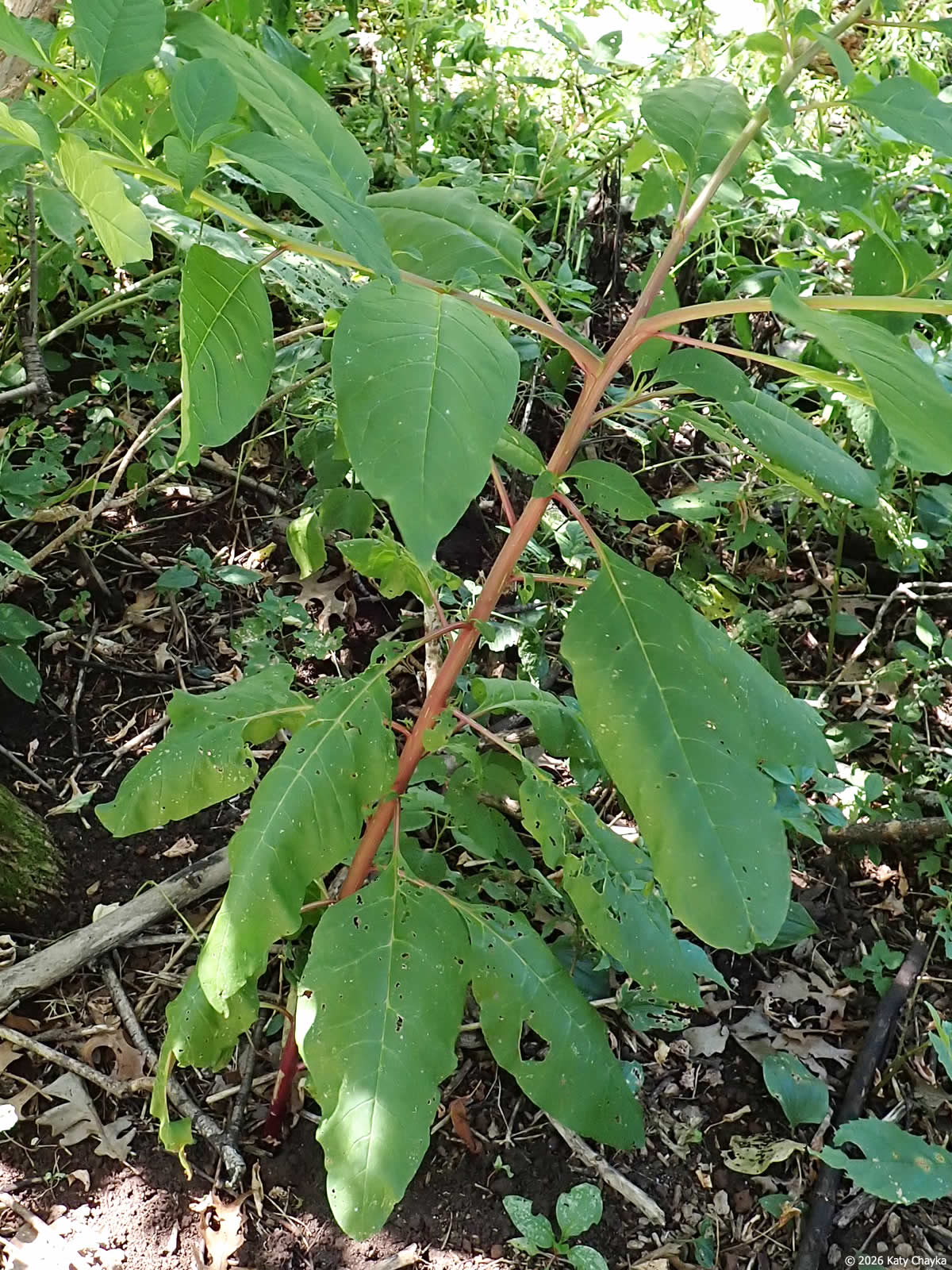 stems are stout, typically turn red/pink/purple
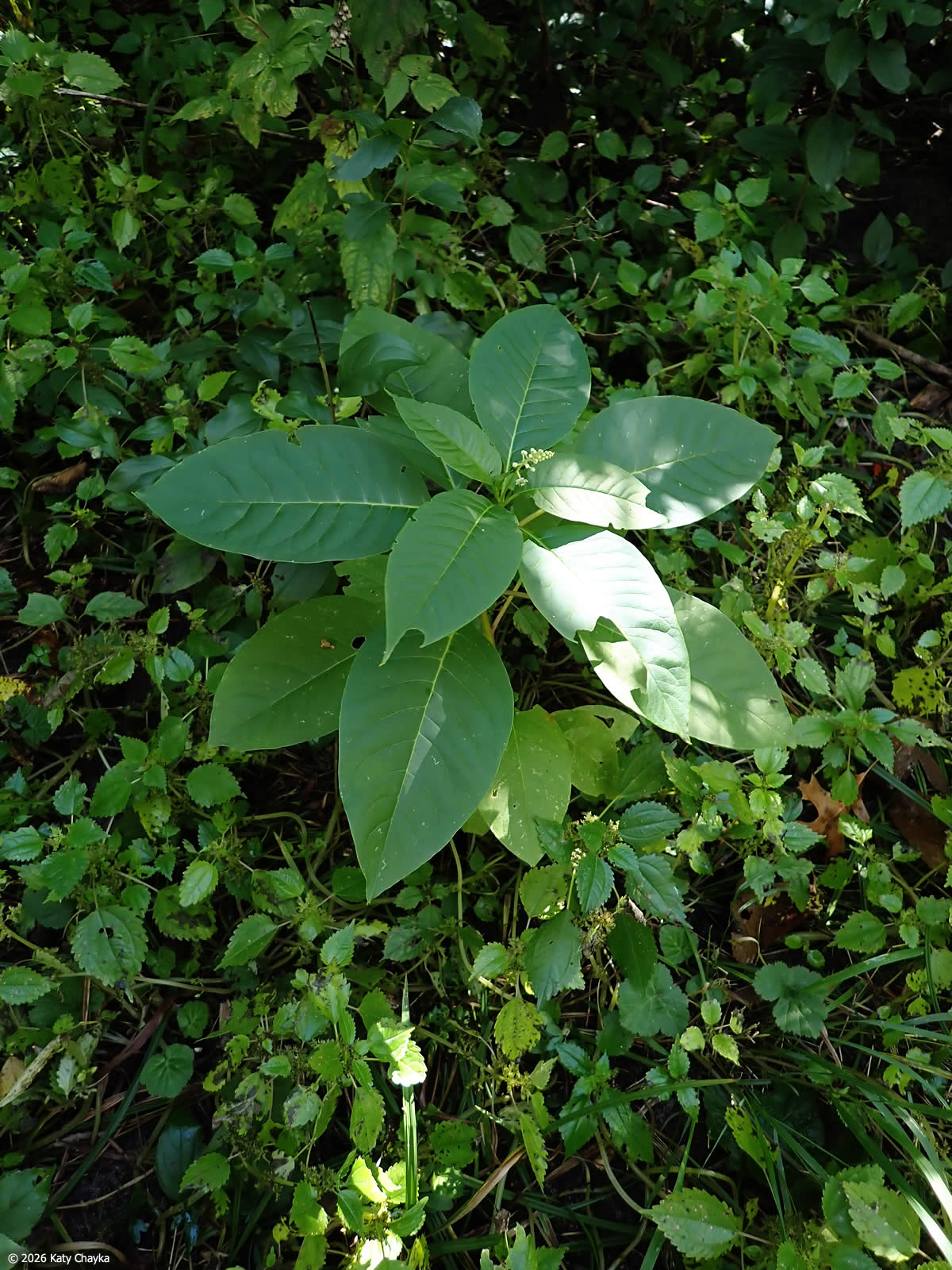 juvenile (first year?) plant putting out a flower cluster
Photos by K. Chayka taken in Anoka County.
Comments
Have you seen this plant in Minnesota, or have any other comments about it?