

Brassica rapa (Field Mustard)
| Also known as: | Turnip Rape, Wild Mustard, Bird's-rape |
|---|---|
| Genus: | Brassica |
| Family: | Brassicaceae (Mustard) |
| Life cycle: | annual |
| Origin: | Europe |
| Status: |
|
| Habitat: | sun; disturbed soil; fields, waste areas, roadsides |
| Bloom season: | June - July |
| Plant height: | 15 to 30 inches |
| Wetland Indicator Status: | GP: UPL MW: UPL NCNE: UPL |
| MN county distribution (click map to enlarge): | 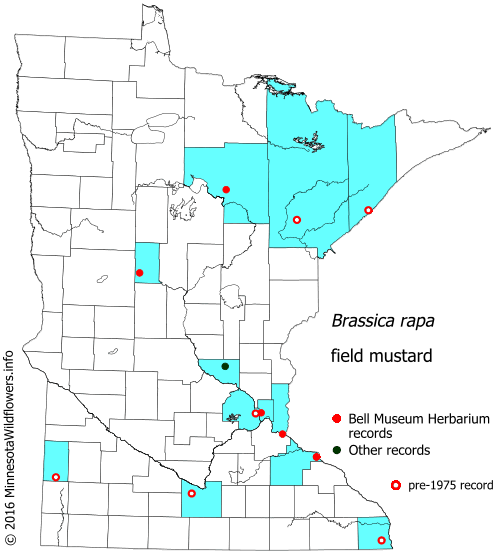 |
| National distribution (click map to enlarge): | 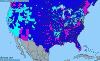 |
Pick an image for a larger view. See the glossary for icon descriptions.
Detailed Information
Flower: 
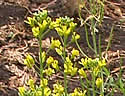
![[photo of flowers]](/udata/r9ndp23q/pd/brassica-rapa-8.jpg) Flowers are in rounded clusters at the end of elongating racemes in the upper plant. Flowers are ¼ to ½ inch across with 4 bright yellow oval petals arranged in a rectangular pattern, on spreading stalks up to an inch long. Behind the flower are 4 narrow green sepals alternating with the petals.
Flowers are in rounded clusters at the end of elongating racemes in the upper plant. Flowers are ¼ to ½ inch across with 4 bright yellow oval petals arranged in a rectangular pattern, on spreading stalks up to an inch long. Behind the flower are 4 narrow green sepals alternating with the petals.
Leaves and stem:
![[photo of leaves]](/udata/r9ndp23q/pd/brassica-rapa-7.jpg) Lower and basal leaves are up to 16 inches long, have broad rounded tips, often deeply round lobed, often wavy around the edges, may be hairy around the edges, tapering to a long winged stalk. Upper leaves become more lance shaped, rounded at the tip, broad at the base, mostly toothless, clasping the stem, decreasing in size as they ascend the stem. Sometimes the leaves can have fine bristles bumps on the surface or underneath, especially along the midvein. Stems are typically smooth with a white waxy bloom.
Lower and basal leaves are up to 16 inches long, have broad rounded tips, often deeply round lobed, often wavy around the edges, may be hairy around the edges, tapering to a long winged stalk. Upper leaves become more lance shaped, rounded at the tip, broad at the base, mostly toothless, clasping the stem, decreasing in size as they ascend the stem. Sometimes the leaves can have fine bristles bumps on the surface or underneath, especially along the midvein. Stems are typically smooth with a white waxy bloom.
Fruit:
![[photo of ripe fruit]](/udata/r9ndp23q/pd/brassica-rapa-18.jpg) Fruit is a slender, round, 1 to 2 inch pod, angling out and up from the stem, that bulges some with ripened seed. Ripe seeds are black, brown or reddish, about 1/16 inch in diameter. At the tip end is a beak 1/3 to ½ inch long that looks like part of the pod with unripe seed.
Fruit is a slender, round, 1 to 2 inch pod, angling out and up from the stem, that bulges some with ripened seed. Ripe seeds are black, brown or reddish, about 1/16 inch in diameter. At the tip end is a beak 1/3 to ½ inch long that looks like part of the pod with unripe seed.
Notes:
A common field weed, Field Mustard is the origin of many cultivars including canola, turnip and bok choy. Mostly a weedy species of waste places and disturbed sites around human activities, it is likely far more common and widespread than herbarium records indicate. There are many mustard species with small yellow flowers—they can be hard to distinguish just from the flowers. Field Mustard is most easily identified by the large rounded basal leaves and smaller clasping stem leaves.
Native Plant Nurseries, Restoration and Landscaping Services ↓
Map of native plant resources in the upper midwest


More photos
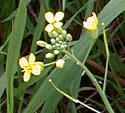 Field Mustard plant
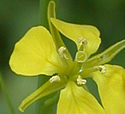 more flowers
 an infestation of Field Mustard
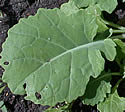 basal rosette
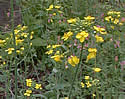 more plants
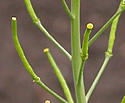 developing seed
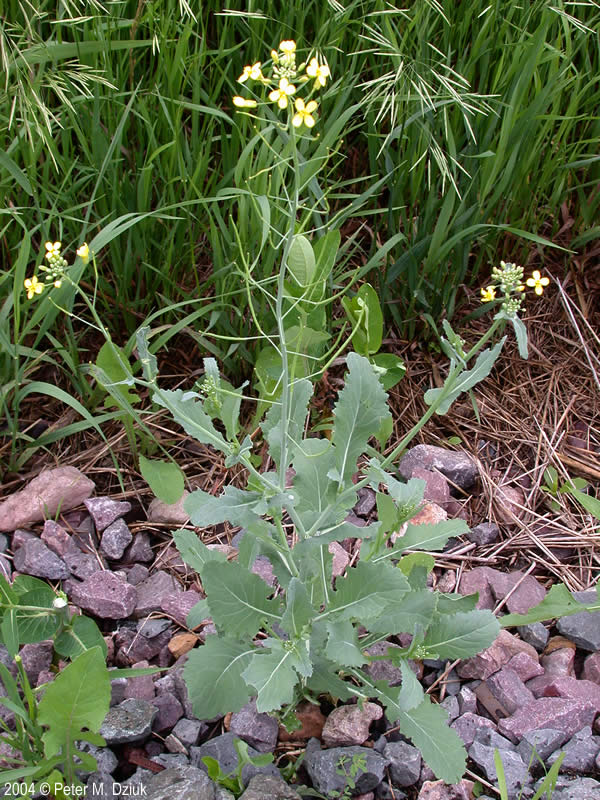 Field Mustard plant
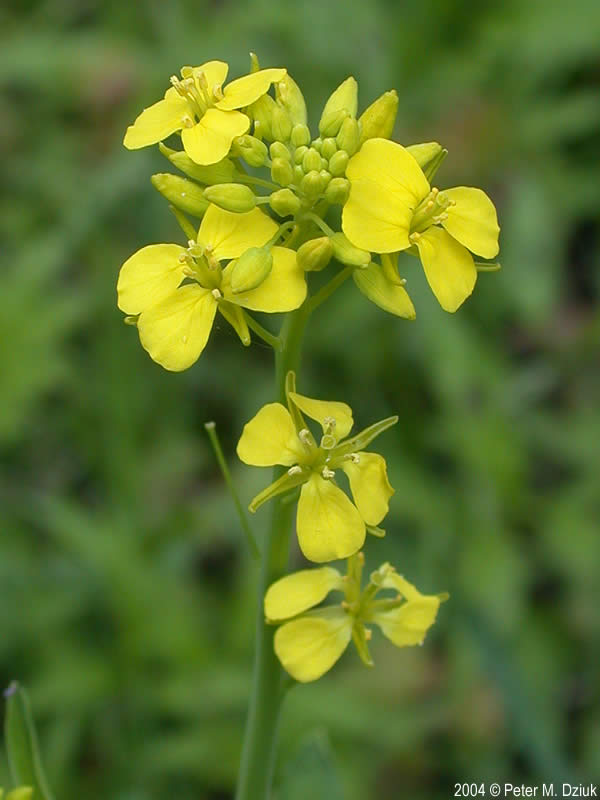 more flowers
 an infestation of Field Mustard
 basal rosette
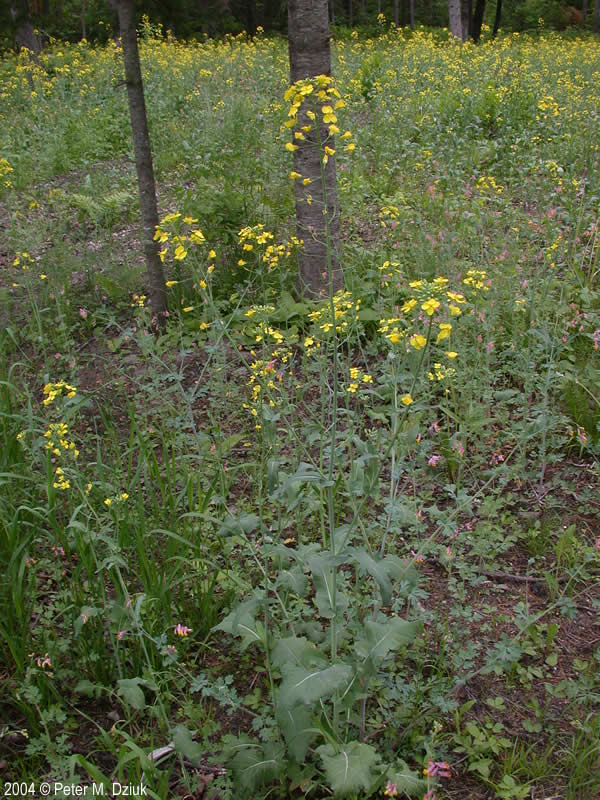 more plants
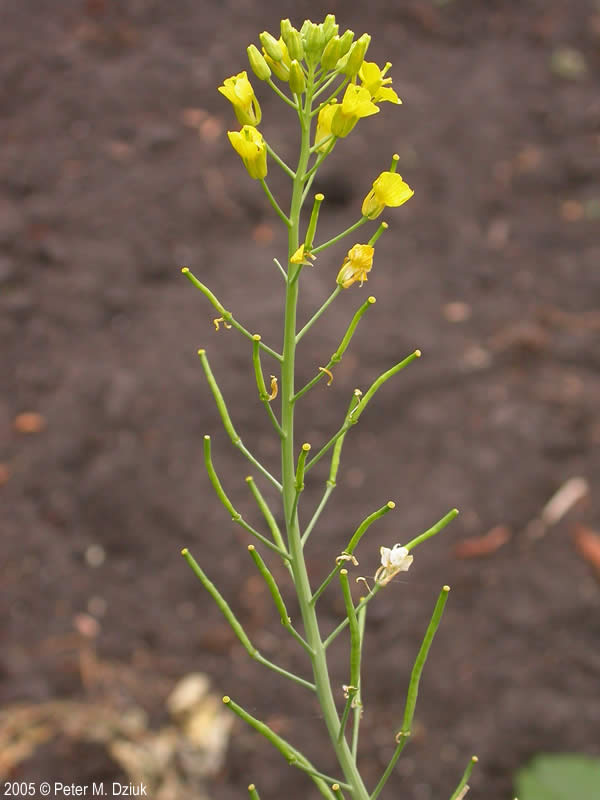 developing seed
Photos courtesy Peter M. Dziuk taken in Hennepin and Sherburne counties.
Comments
Have you seen this plant in Minnesota, or have any other comments about it?
on: 2016-06-15 22:10:05
A single plant popped up in my rain garden. Thanks so much for this website; it made it easy to figure out what it was - after it flowered!
on: 2022-06-12 15:46:14
On the neglected roof of a four story building across from me
on: 2023-07-17 18:22:47
Popped up in my garden. One large plant. Wondering if it came in with the manure bags I used.
on: 2024-06-29 11:20:46
In my yard after planting clover.