

Triadenum fraseri (Fraser's Marsh St. Johnswort)
| Also known as: | Bog St. John's-wort |
|---|---|
| Genus: | Triadenum |
| Family: | Hypericaceae (St. John's-wort) |
| Life cycle: | perennial |
| Origin: | native |
| Habitat: | part shade, sun; wet; bogs, marshes, fens, along shores |
| Bloom season: | July - August |
| Plant height: | 1 to 2 feet |
| Wetland Indicator Status: | GP: OBL MW: OBL NCNE: OBL |
| MN county distribution (click map to enlarge): |  |
| National distribution (click map to enlarge): | 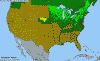 |
Pick an image for a larger view. See the glossary for icon descriptions.
Detailed Information
Flower: 
![[photo of flowers]](/udata/r9ndp23q/pd/triadenum-fraseri-006.jpg) Clusters of a few to several flowers arising from leaf axils, at the end of branching stems, and at the top of the plant, though it is a challenge to catch the blooms when they are open. Flowers are ¼ to ¾ inches wide when fully open, with 5 pink petals and 9 or 12 yellow-tipped stamens surrounding a greenish style. The sepals cupping the flower are green or purplish with blunt or pointed tips, and half as long as the petals, or more.
Clusters of a few to several flowers arising from leaf axils, at the end of branching stems, and at the top of the plant, though it is a challenge to catch the blooms when they are open. Flowers are ¼ to ¾ inches wide when fully open, with 5 pink petals and 9 or 12 yellow-tipped stamens surrounding a greenish style. The sepals cupping the flower are green or purplish with blunt or pointed tips, and half as long as the petals, or more.
Leaves and stems:
![[photo of leaves]](/udata/r9ndp23q/pd/triadenum-fraseri-455.jpg) Leaves are oval to egg-shaped to rounded triangular, to 2½ inches long and 1¼ inches wide, toothless and hairless, with a rounded tip, rounded base and no leaf stalk, the larger leaves somewhat clasping the stem and often angled up. Color is blue-green, sometimes tinged purple. The underside of leaves is dotted with brown or black glands. Stems are often reddish. The plant may be erect but often leans over.
Leaves are oval to egg-shaped to rounded triangular, to 2½ inches long and 1¼ inches wide, toothless and hairless, with a rounded tip, rounded base and no leaf stalk, the larger leaves somewhat clasping the stem and often angled up. Color is blue-green, sometimes tinged purple. The underside of leaves is dotted with brown or black glands. Stems are often reddish. The plant may be erect but often leans over.
Fruit:
![[photo of fruit]](/udata/r9ndp23q/pd/triadenum-fraseri-002.jpg) Fruit is a dark red, 3-sectioned capsule ¼ to ½ inch long, oval to cylindrical, abruptly tapered to a sharply pointed tip.
Fruit is a dark red, 3-sectioned capsule ¼ to ½ inch long, oval to cylindrical, abruptly tapered to a sharply pointed tip.
Notes:
It is a rare event to find Marsh St. Johnswort with open flowers. It is more commonly IDed by the leaves and the maroon fruit, which might be mistaken for flower buds. On a trip to northern Beltrami County in early July, we got very lucky to find a number of flowering plants that had not yet developed fruit. This species also goes by Latin name Hypericum virginicum but the accepted name in Minnesota is Triadenum fraseri. Along with all Hypericum species, it switched from the Clusiaceae family to Hypericaceae
Native Plant Nurseries, Restoration and Landscaping Services ↓
Map of native plant resources in the upper midwest


More photos
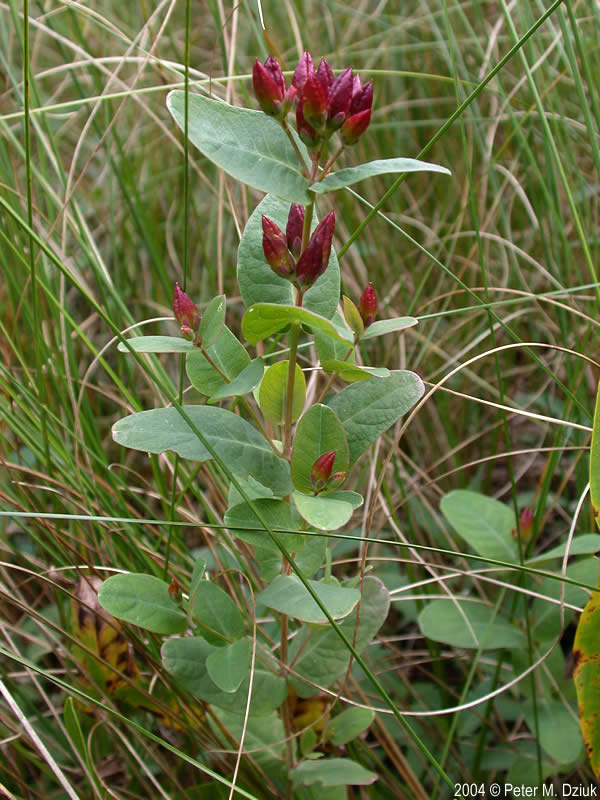 Fraser's Marsh St. Johnswort plant
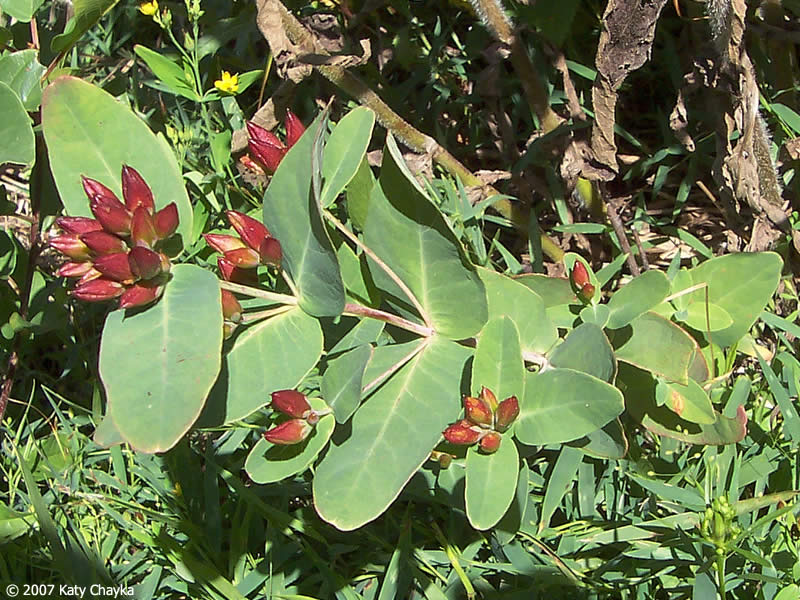 more plants
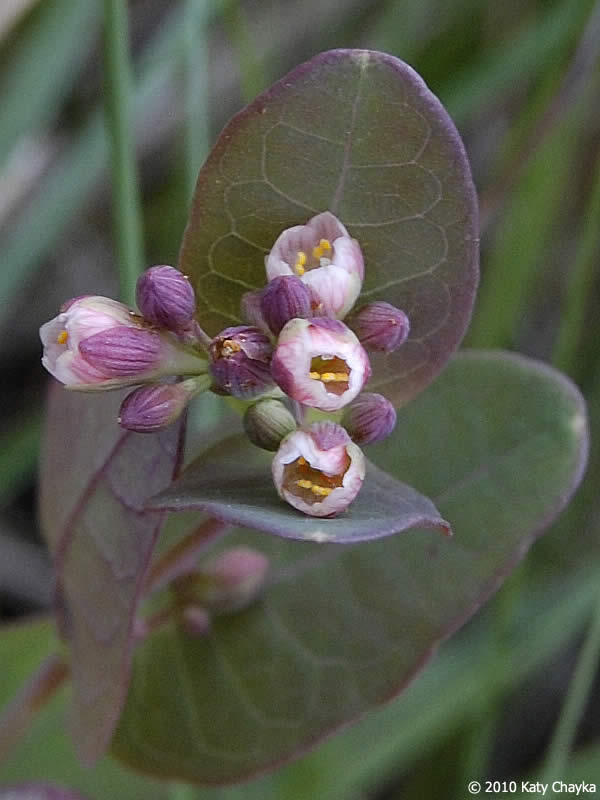 more flowers
Photos by K. Chayka taken in Anoka and Beltrami counties. Photos courtesy Peter M. Dziuk taken in Anoka County.
Comments
Have you seen this plant in Minnesota, or have any other comments about it?
on: 2020-07-29 22:40:33
In Uncas Dunes SNA (main unit) and found a flowering plant in a Blaine public park yesterday in flower!
on: 2020-12-30 11:53:14
Last of the blossoms opening August 23, 2017 in Blaine Preserve SNA.
on: 2021-08-20 05:42:42
Is this genus of St. John's wort edible / safe for consumption (besides the berries) or hold the same properties as perforate St. John's wort? (Ie. mood stability). I can't seem to find anything on this beautiful little plant other then your website!
on: 2021-08-20 07:43:41
Madison, we have no information regarding edible or medicinal uses of this plant, but since it is a different genus we suspect there are few, if any, similarities in that regard. BTW, it does not produce berries?the capsules are not fleshy and only contain dry seeds.
on: 2023-09-17 16:41:31
Found a few in a Spruce big.